Best Table Tennis Racket for Intermediate Players 2026: Top 6 Picks Ranked by Speed, Spin & Control
Updated: April 6, 2026
1207
Your skills have outgrown your racket. You’re looping, flicking, and winning rallies, but your equipment is still holding you back. The right upgrade doesn’t just improve your game; it unlocks the next level of it.
At the intermediate stage, the wrong racket is the most expensive mistake you can make. Too fast and you lose control. Too slow and you cap your development. Too cheap, and you build bad habits. The goal isn’t just speed; it’s the right balance of speed, spin, and control to play with confidence. That’s where the best table tennis racket for intermediate players makes the difference.
In this guide, we’ve reviewed the six best table tennis rackets for intermediate players; tested for performance, matched to playing style, and ranked by speed, spin, control, and value. Whether you’re an offensive looper, an all-round attacker, or a tactical defender, there’s a setup here built for exactly where your game is right now.
Let’s find yours.
Table of Contents
Why Trust This Guide
Every setup on this list has been technically evaluated by Sufyan Faizi, a competitive table tennis player and coach with hands-on experience at the club and collegiate levels. Our recommendations are built around real intermediate development, not brand sponsorships, manufacturer ratings, or marketing claims.
We’ve tested both premade and custom rackets at the intermediate level to separate what genuinely improves your game from what looks good on paper. If it’s on this list, it earned its place.
Our goal is simple: help you develop faster, not sell you the most expensive option.
Best Table Tennis Racket for Intermediate Players: At a Glance
Not sure where to start? Here’s the full picture: fast and simple. We’ve organized our top six picks across playing styles so you can find your match in seconds. No fluff. Just the right racket for where your game is right now.
What Makes a Racket Right for Intermediate Players?
Intermediate rackets bridge the gap between beginner control and professional speed. At this stage, you’ve mastered the basics. Now you need equipment that rewards your developing technique, without punishing every small error. Get this choice right, and your game accelerates. Get it wrong, and you spend months fighting equipment that was never built for where you are.
Look for these three specs:
- Blade speed: ALL to OFF+: fast enough to attack, forgiving enough to learn
- Rubber sponge: 1.8–2.0mm: enough spring for spin, enough control for placement
- ITTF approval: competition-legal from day one
If your racket ticks all three, you’re not fighting your equipment anymore; you’re developing your game. Learn more about blade speed and sponge thickness in our complete table tennis racket guide. Weighing a 7-ply upgrade at this stage? Our 5-ply vs 7-ply blade breakdown covers exactly when that jump makes sense.
Top 6 Best Table Tennis Rackets for Intermediate Players: Full Reviews
Finding the best table tennis racket for intermediate players isn’t just about picking a popular brand. It’s about finding the right match for your style, technique, and budget. We’ve evaluated dozens of intermediate setups. Most come with trade-offs: too fast, too niche, or built for a style you haven’t developed yet. These six get the fundamentals right.
1. Killerspin JET800 Speed N2: Best Overall
The most complete premade racket for intermediate players ready to attack, available as a ready-to-play, premade setup. Ask any table tennis coach worldwide what to buy for real speed and control without assembly, and this name comes up first, every time. No assembly required, no decisions to make. Just pick it up and start attacking with confidence.
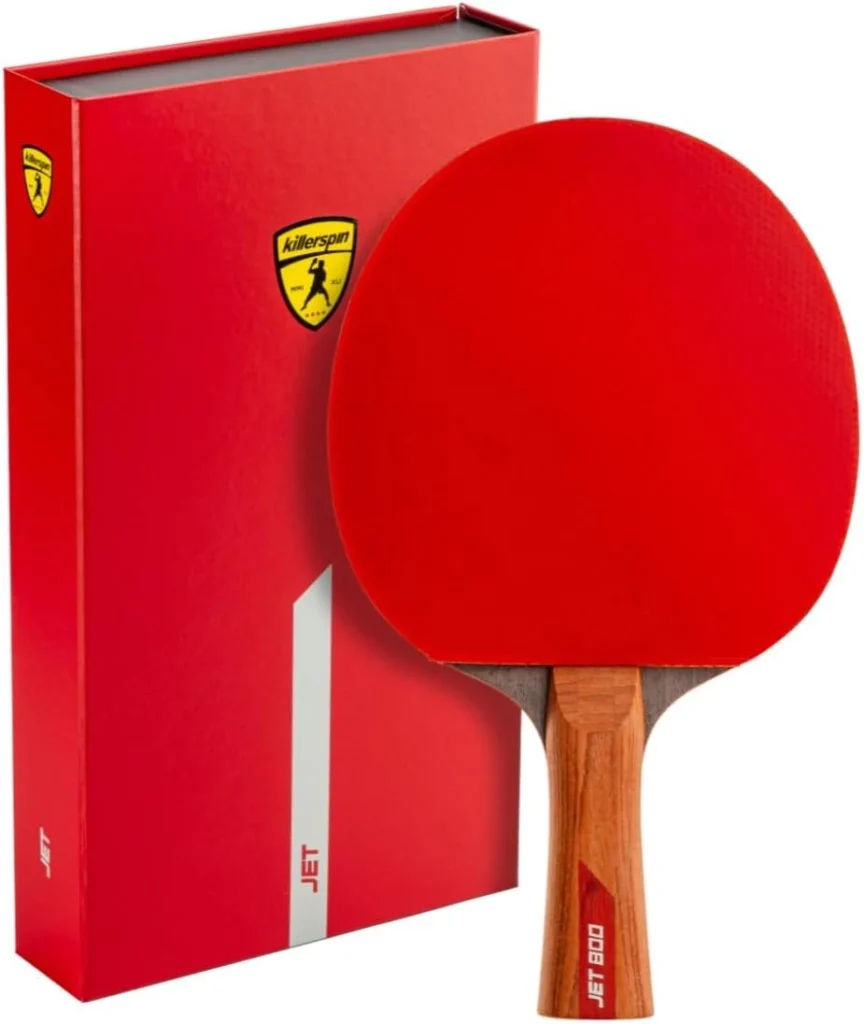
Key Specs:
- Blade: 7-Ply Wood + Carbon Layers
- Rubber: Killerspin Nitrx-4Z (both sides, ITTF approved)
- Sponge: 1.8mm
- Weight: ~185g
- ITTF: Yes
- Speed: OFF
- Spin: 8.5/10
- Control: 8.5/10
- Price: $$ (~$70–$100)
The Nitrx-4Z rubber rewards developing technique with real spin and grip, while the carbon layers add just enough pace to feel like a genuine upgrade from beginner gear. The blade balances speed and control well enough that you won’t outgrow it the moment your strokes tighten up.
Pros
- Genuine speed-spin-control balance out of the box
- No assembly required, ready to play immediately
- ITTF approved for competitive play
Cons
- Slightly faster than pure all-wood setups
- Less customizable than a separate blade + rubber build
- Premium price for a premade
The safest, most complete upgrade for intermediates who want real performance without assembling a custom setup. At $70–$100, it delivers everything a developing attacker needs. Upgraded your racket? Now upgrade your serve. Master every serve type with step-by-step techniques.
2. Yasaka Mark V: Best for Control & Technique
Yasaka Mark V is one of the most universally recommended intermediate table tennis rackets in the world, available as a ready-to-play, premade setup. Ask any table tennis coach worldwide what to buy at the intermediate stage, and this name comes up first, every time. No assembly required, no decisions to make. Just pick it up and start developing your game.
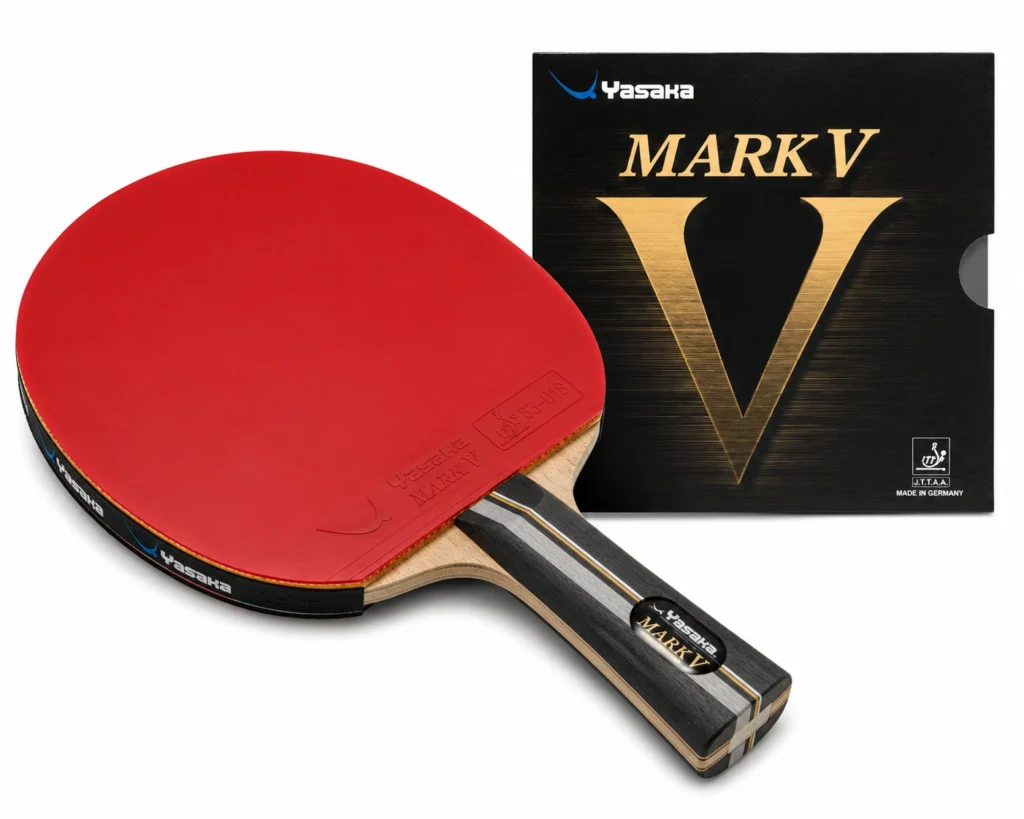
Key Specs:
- Blade: Yasaka Sweden Extra (5-ply all-wood)
- Rubber: Yasaka Mark V (both sides)
- Sponge: 2.0mm
- Weight: ~180g
- ITTF: Yes
- Speed: ALL+
- Spin: 8/10
- Control: 9/10
- Price: $$ (~$80–$120)
The Mark V rubber rewards correct technique; excellent topspin, reliable control, and tactile feedback to develop your game. The Sweden Extra blade amplifies these qualities without extra speed.
Pros
- Most forgiving intermediate setup available
- Excellent spin and placement control
- Trusted by coaches globally for skill development
Cons
- Slower than carbon setups
- Less customisable than a separate blade + rubber purchase
- May feel limiting once the technique is highly developed
The safest, most development-friendly upgrade available. At $80–$120, it delivers everything an intermediate player needs, without the risk of buying too fast, too soon.
3. Eastfield Allround Professional: Best for Moving Past Entry-Level
The natural step up for players who’ve outgrown their beginner bat but aren’t ready for a full custom build. Available as a ready-to-play, premade setup. Coaches recommend it specifically for players developing advanced spins and placement, and it sits comfortably at the upper end of ready-made bats. No assembly required, no decisions to make. Just pick it up and start refining your technique.
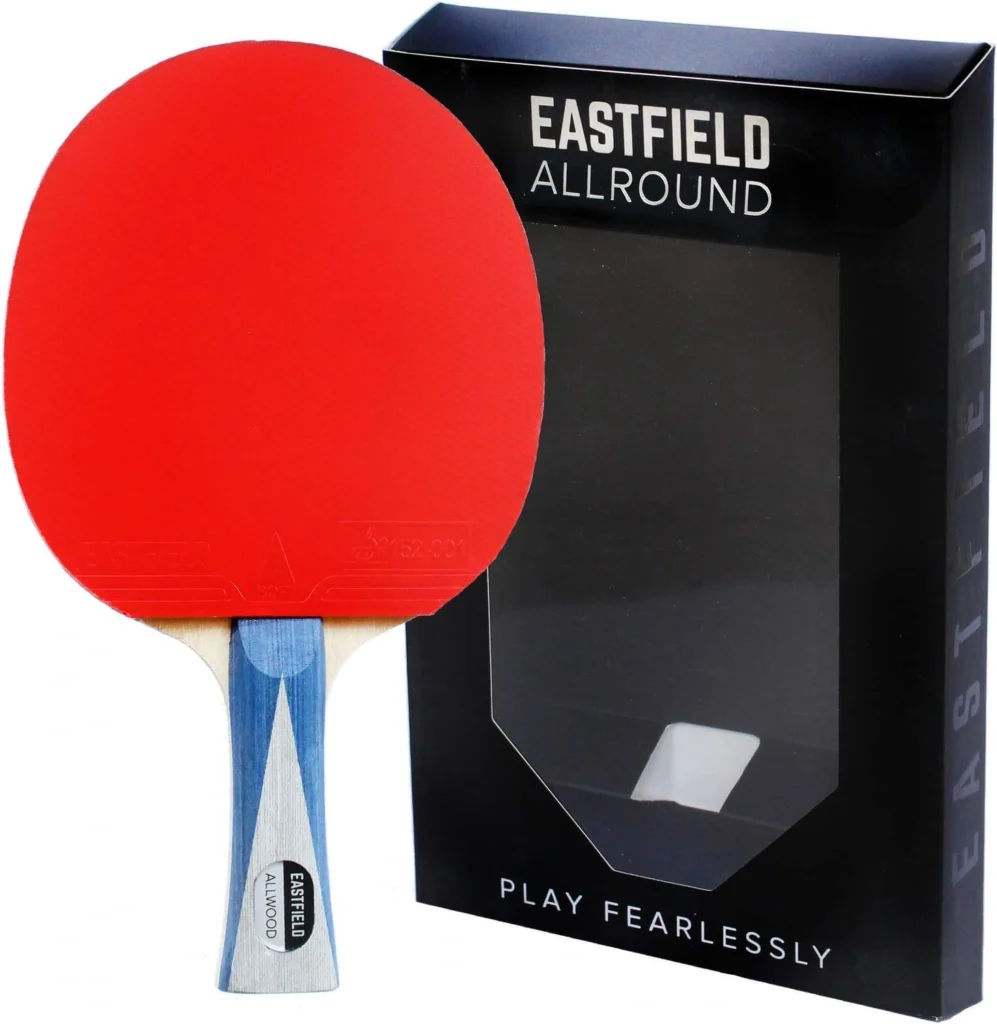
Key Specs:
- Blade: 5-Ply All-Wood
- Rubber: Eastfield house rubber (both sides, ITTF approved)
- Sponge: 1.9mm
- Weight: ~178g
- ITTF: Yes
- Speed: ALL
- Spin: 8/10
- Control: 8.5/10
- Price: $$ (~$60–$90)
The soft, responsive rubber gives you the feedback needed to learn advanced spin and precise placement, while the all-wood blade keeps the pace controllable while you’re building consistency.
Pros
- Soft, responsive feel ideal for learning advanced spin
- Strong step up from entry-level without overshooting
- ITTF approved for competitive play
Cons
- Not built for players chasing maximum offensive speed
- Less recognized brand than Yasaka or Killerspin
- Ceiling lower than carbon setups once the technique matures
A genuine bridge racket for players ready to leave beginner gear behind but not yet ready for a fully custom, faster setup.
4. STIGA Pro Carbon: Best for Offensive Players
A classic choice for intermediates ready to take their attacking game to the next level. Two layers of carbon fiber integrated into the blade generate genuine speed and spin for players who already understand basic stroke mechanics. If you’re looping with confidence and want a racket that finishes points rather than just starts them, this is worth the step up.
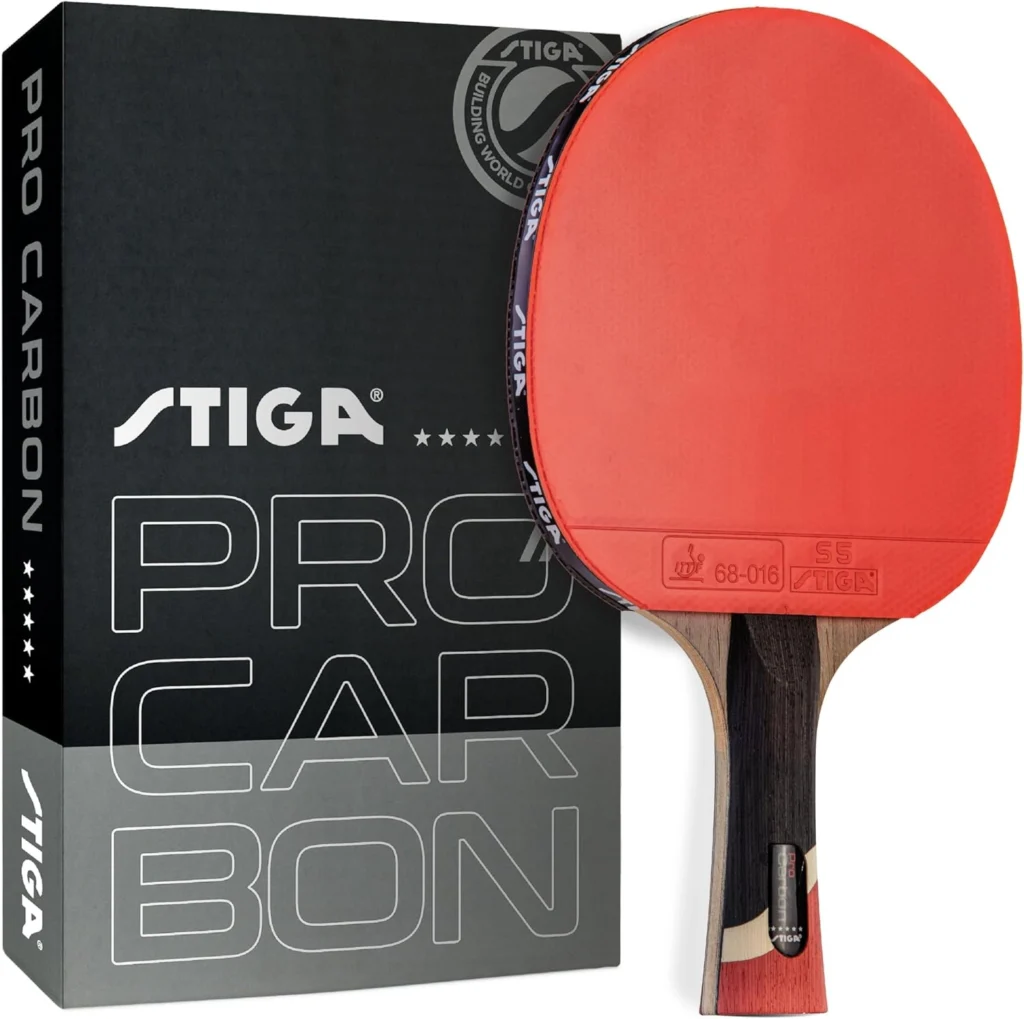
Key Specs:
- Blade: 7-Ply Wood + Carbon Layers
- Rubber: STIGA S5 inverted (both sides, ITTF approved)
- Sponge: 2.0mm
- Weight: ~180g
- ITTF: Yes
- Speed: OFF+
- Spin: 7.5/10
- Control: 7.5/10
- Price: $$ (~$60–$90)
The carbon layers add real pace once you commit to a full stroke, while the S5 rubber keeps enough grip that your loops still land instead of sailing long. It rewards players who are past the “just make contact” stage and ready to attack with intent.
Pros
- Excellent speed for offensive intermediates
- ITTF approved for competitive play
- Ready to play, no assembly needed
Cons
- Less forgiving than all-wood control setups
- Can be too fast for players without consistent strokes
- Carbon feel may feel stiff to all-wood players
The natural next step once your strokes are consistent and you’re ready to trade some forgiveness for real finishing speed.
5. Palio Legend 3.0: Best Value
The best intermediate racket under $80. Fast, spinny, and punchy, built for improvers who want to take their attacking game to the next level without spending professional money. If you attack relentlessly and want maximum firepower on a budget, this is your racket.
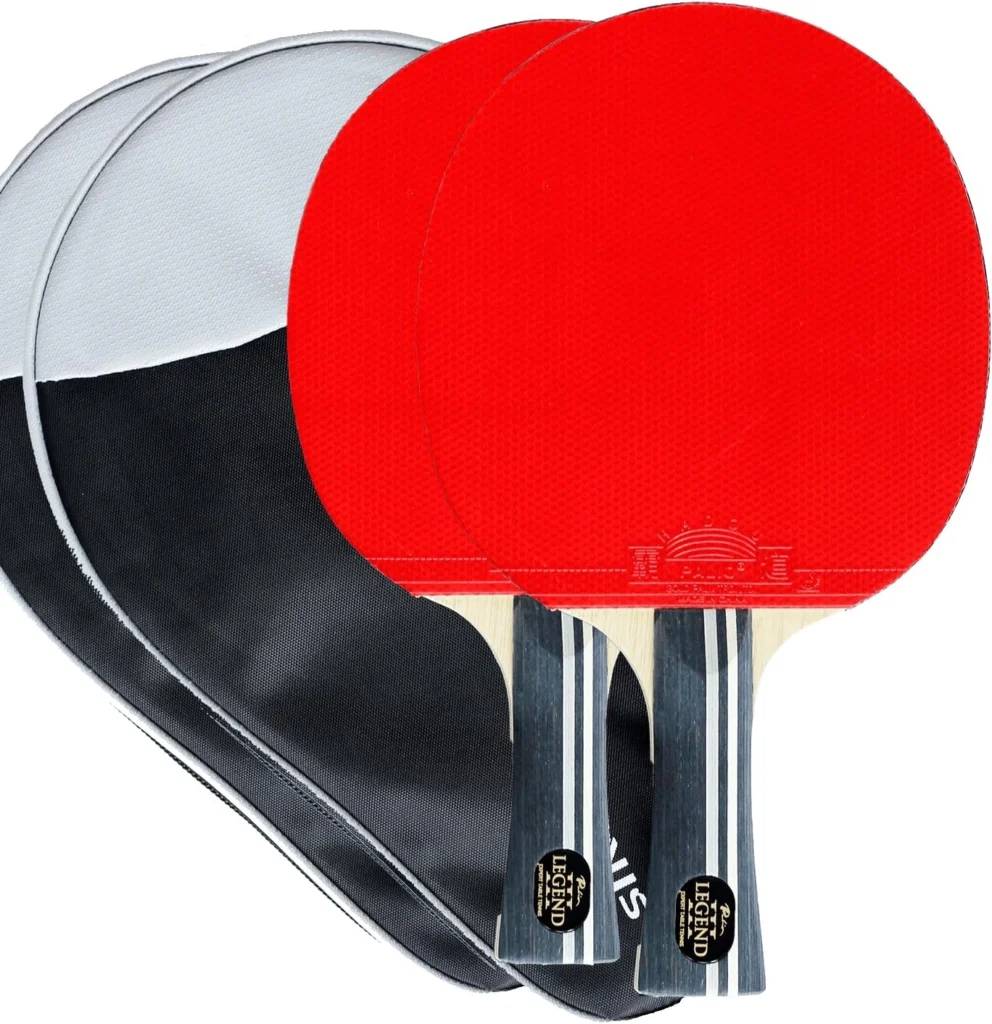
Key Specs:
- Blade: Palio Legend 3.0 (all-wood)
- Rubber: Palio CJ8000 (both sides, tacky)
- Sponge: 2.0mm
- Weight: ~178g
- ITTF: Yes
- Speed: OFF–
- Spin: 9/10
- Control: 7.5/10
- Price: $ (~$50–$80)
Palio rates this 9/10 for speed and spin, 7/10 for control; exactly right for offensive improvers willing to trade control for firepower. If you want maximum spin on a budget, see our Best Table Tennis Racket for Spin guide.
Pros
- Best value intermediate racket available
- Excellent spin generation for the price
- ITTF approved for competitive play
Cons
- Less control than Yasaka Mark V
- Tacky rubbers require more technique to generate speed
- Not ideal for defensive or all-round players
The aggressive improver’s choice. At $50–$80, nothing at this price comes close for offensive intermediate players. If you’re on a tighter budget, see our guide on the Best Table Tennis Rackets Under $50 for proven intermediate-friendly options.
6. Tibhar Stratus Power Wood + Rakza 7: Best Custom Upgrade
The top custom setup for intermediate offensive players ready to take their attacking game to the next level. If you’re looping with confidence and winning points from mid-distance, this is your racket. Exceptional balance of speed and control, recommended consistently by coaches for players with 1–3 years of club training.
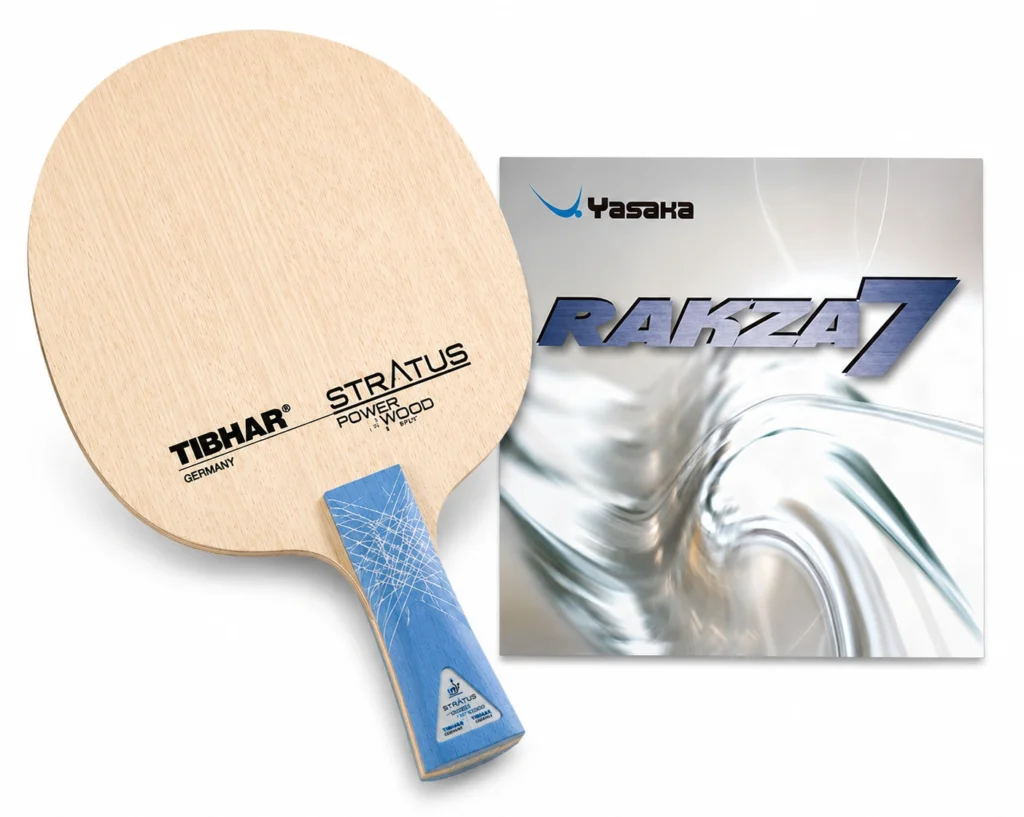
Key Specs:
- Blade: Tibhar Stratus Power Wood (5-ply all-wood)
- Rubber: Yasaka Rakza 7 (FH) + Rakza 7 Soft (BH)
- Sponge: 2.0mm
- Weight: ~173g
- ITTF: Yes
- Speed: OFF–
- Spin: 8.5/10
- Control: 8/10
- Price: $$ (~$110–$150)
The Stratus Power Wood is surprisingly controllable for its speed. Rakza 7 for forehand power, Rakza 7 Soft for backhand feel, room to grow without being overwhelmed.
Pros
- Outstanding balance of speed and control for OFF– level
- Rakza 7 delivers excellent spin and consistency
- Lighter than most setups at ~173g, easy to manoeuvre
Cons
- Requires self-assembly or a specialist retailer
- Rakza 7 needs replacing every 4–6 months with regular play
- Slightly less forgiving than all-round setups
The smart offensive upgrade for players ready to build a fully custom setup and fine-tune every component to their game. Your new racket deserves the right table tennis ball. Learn why 40mm, 2.7g, and ABS plastic matter for your game.
Side-by-Side Comparison: Top 6 Intermediate Rackets
At the intermediate stage, the balance between speed and control defines your development. Too much speed too soon, and your technique breaks down. Too little and your game stalls. Use this table to compare all six picks across every key spec in one place.
Ratings are drawn from manufacturer specifications and verified community feedback. If you’re still deciding, focus on the speed and control columns first; they tell you more about fit than any other stat.
And if your table lives outside, the rules change completely; see our best outdoor table tennis racket guide for weatherproof picks built for permanent outdoor use.
Premade vs Custom Setup for Intermediate Players
Every intermediate player faces the same decision: premade or custom. Get it right and your development accelerates. Get it wrong, and you’ll be buying twice. The good news is that once you know where your game stands, the answer becomes obvious. The right choice depends entirely on where your game is right now.
- Premade rackets come fully assembled: blade and rubbers glued and ready to play. Convenient, consistent, and ideal for players who haven’t yet developed a defined playing style. Killerspin JET800, Yasaka Mark V, and Eastfield Allround Professional are all strong premade options at this stage.
- Custom setups mean selecting blades and rubbers separately. Once your style is defined and your strokes are consistent, a custom setup lets you fine-tune every component to match exactly how you play. Tibhar Stratus Power Wood + Rakza 7 is the custom pick on this list built for exactly that stage.
Both premade and custom rackets have their place. Each serves a different stage of your development. The question is simply where your game is right now. Here’s how they compare:
Still developing your style? Start premade. Style defined and strokes consistent? Go custom; it’s no longer a luxury, it’s a necessity. Not sure which path is right? See our guide: pre-made vs custom table tennis rackets.
When to Upgrade to an Intermediate Racket?
Upgrading too early can lock in poor technique, while waiting too long can slow your progress. The ideal moment sits right in between, when your skills start demanding more from your equipment. At this stage, your racket should no longer hold you back but actively support your development.
You’ll know you’ve reached that point when a few clear signs begin to show:
- You consistently push beyond your racket’s control limits during rallies
- Your loops, flicks, and topspin drives feel reliable and repeatable
- You’ve started competing at the club level or are preparing for tournaments
- Your beginner racket feels slow or unresponsive in high-pressure situations
Recognizing these signals ensures your upgrade is timely and purposeful, helping you transition smoothly into an intermediate style of play without compromising your fundamentals. Starting with a beginner racket? Check our best beginner table tennis rackets first.
Mistakes to Avoid When Choosing an Intermediate Racket
Upgrading your racket is one of the most important decisions you’ll make as an intermediate player. But the wrong choice doesn’t just cost money; it actively slows your development and builds habits that take months to undo. Too many intermediate players make the same avoidable mistakes. Knowing these traps before you spend money saves weeks of frustration and expensive do-overs.
1. Speed over control
The most common and costly mistake. A faster racket doesn’t make you a faster player; it exposes every weakness in your technique, including jumping straight to carbon before your strokes are consistent. Buy for your current skill first. Carbon feels natural only after the all-wood technique is solid.
2. Wrong rubber hardness
Hard sponge (50°+) needs fast, aggressive strokes to activate. Most intermediate players get better results from a medium sponge (42–47°). Buying professional rubber without the technique to use it guarantees inconsistency.
3. Blade-rubber mismatch
Pairing a fast blade with fast rubbers, double fast creates speed beyond what most intermediates can control. A medium blade with fast rubbers almost always outperforms a fast blade with fast rubbers.
4. Replacing one rubber
When one rubber wears out, replace both simultaneously. Mismatched rubber ages create completely different forehand and backhand responses and destroy consistency.
Most bad purchases come down to one thing: buying for the player you want to become instead of the player you are today. Be honest about your current level, and your game will thank you for it. Rubber choice matters just as much. See our complete table tennis rubber guide.
Rackets to Avoid as an Intermediate Player
Choosing the wrong racket doesn’t just waste money; it slows your development and builds habits that are hard to undo. Not every racket on the market is worth your money. These common traps look like good deals but will actively hurt your development. Knowing what to avoid is just as important as knowing what to buy.
- Heavily marketed beginner bats (Dunlop G-Force, Nitro, Blaster): oversized branding, poor rubber quality, random gaps in handles. The packaging is the product.
- Plastic-blade recreational bats (Cornilleau Tacteo): not competition legal. Cannot develop proper spin technique or match-ready strokes.
- Unbranded “professional” sets: pro player photo on the box, under $30, sold with balls and a carry case. No ITTF approval, no quality control.
If it costs under $30 and has a pro player’s face on the cover, avoid it. Invest in a proper setup from the start; it’s always cheaper than buying twice. For a broader overview at any level, start with our How to Choose a Table Tennis Racket guide.
Our Verdict: Which One Should You Buy?
You’ve seen the specs, compared the numbers, and weighed the options. Here’s the straight answer: for most intermediate players, the Killerspin JET800 Speed N2 is the one to buy. It delivers genuine competitive performance, rewards developing technique, and gives you the speed-spin-control balance needed to build a complete game without assembling anything yourself.
For everyone else, match your style:
- All-round attacker: Killerspin JET800 Speed N2, safest, most complete out-of-the-box upgrade
- Control-first technique developer: Yasaka Mark V, maximum feel, most trusted by coaches globally
- Moving past entry-level gear: Eastfield Allround Professional, soft, responsive bridge racket for learning advanced spin
- Offensive player ready to attack: STIGA Pro Carbon, genuine speed once strokes are consistent
- Budget-conscious improver: Palio Legend 3.0, best value offensive upgrade under $80
- Defined style, full customization: Tibhar Stratus Power Wood + Rakza 7, built exactly to your game
Don’t overthink it. If you want the safest, most proven upgrade, buy the Killerspin JET800. If your playing style is clearly defined, pick the racket that matches it. Either way, you’re upgrading to a setup that will actually help your game, not hold it back. When you’re ready for professional speed, we have that covered too in our guide on the Best professional Table tennis rackets.
Conclusion
Finding the best table tennis racket for intermediate players isn’t about chasing the fastest blade or the most expensive rubber; it’s about matching equipment to your current technique and playing style. The right setup at this stage builds consistency, sharpens your shots, and prepares your game for the next level.
Whether you’re an all-round attacker, an aggressive looper, or a control-focused developer, this guide covers the best table tennis rackets for intermediate players at every budget. From the ready-to-play Killerspin JET800 and the universally trusted Yasaka Mark V to the value-driven Palio Legend 3.0 and the fully custom Tibhar Stratus Power Wood + Rakza 7, there’s a setup here for every serious intermediate player.
Your intermediate racket is a major step up. But when you’re ready to see what’s next, or compare it against every top-rated setup, explore our best racket guide.
FAQS
What is the best table tennis racket for intermediate players?
The best table tennis racket for intermediate players is the Killerspin JET800 Speed N2, a genuine speed-spin-control balance, ready to play with no assembly. For players who prioritize control while developing technique, the Yasaka Mark V remains the most trusted choice among coaches.
When should I upgrade from a beginner to an intermediate racket?
Upgrade when you can consistently loop, flick, and attack with control. If your current racket feels slow and unresponsive under match pressure, or you’re preparing for club competition, it’s time to upgrade.
Is a carbon blade good for intermediate players?
No, unless your technique is already consistent and repeatable. Carbon blades amplify errors; most intermediate players develop faster on all-wood setups first. Once your strokes are solid, carbon adds speed without sacrificing control.
What sponge thickness is best for intermediate players?
1.8–2.0mm is the sweet spot. Thick enough to generate spin and speed, controlled enough to maintain placement accuracy. Avoid 2.1mm+ until your technique can consistently activate the rubber.
How much should I spend on an intermediate table tennis racket?
$50–$160 covers every legitimate intermediate option. Under $50, and quality drops sharply. Over $160, and you’re buying professional equipment; your technique may not be ready for it. The Palio Legend 3.0 at $50–$80 is the best budget option. The Killerspin JET800 at $70–$100 is the best all-round investment.
What is the difference between premade and custom rackets for intermediate players?
Premade rackets come fully assembled, convenient for early intermediates still developing their style. Custom setups let you choose blade and rubbers separately for maximum performance. Once your playing style is defined and strokes are consistent, a custom setup is the smarter long-term investment.
Please Write Your Comments