Best Table Tennis Table 2026: Tested and Ranked for Every Category
Updated: July 12, 2026
753
Every table tennis table claims to be tournament-grade, and every review site claims to have tested it. Neither is usually true. Here’s what actually separates a $500 table from a $2,000 one, and which one you actually need.
Thickness, not price, is the real driver behind how a table tennis table plays. A $500 table and a $900 table at the same 19mm rating feel nearly identical on the bounce, so the extra money is going somewhere else entirely, usually the frame, the warranty, or a brand name you’re paying to trust.
This guide breaks down the best table tennis table by real buying situations rather than marketing tiers, and shows you exactly where that extra money goes so you’re not paying for hype you’ll never notice on the court.
Table of Contents
Find Your Table in 30 Seconds
Before the reviews, three quick questions will point you to the right category faster than reading eight full write-ups. Most buyers already know the answer to all three; they just haven’t seen them laid out together.
1. Do you have a dedicated, permanent space for it?
- Yes → An indoor performance or intermediate table (16–22mm) is worth the investment.
- No → Look at foldable indoor tables or a conversion top instead.
2. Is this for serious training or family fun?
- Serious/competitive → 22mm+ ITTF-approved tables only. Anything thinner will hold you back once you’re playing regularly.
- Family/recreational → 15–19mm tables are genuinely fine. You won’t notice the bounce difference at a casual level.
3. What’s your realistic budget?
- Under $600 → Entry-level indoor or a conversion top
- $600–$1,200 → The sweet spot most serious home players land in
- $1,200+ → Tournament-grade thickness, heavier frames, better warranties
That’s it: three questions, one clear direction. Now jump to the full reviews section and find the table that actually fits your game, your space, and your budget. Once you’ve picked a category, make sure you’re choosing the right racket to go with it: Table Tennis Racket guide: With parts, types, performance & how to choose.
Table Thickness & Bounce: What the Numbers Actually Mean
Thickness determines bounce quality, not price alone. Two tables at the same mm rating should feel nearly identical to play on; the price gap between them is almost always frame durability and features.
- • 12–15mm: Family/recreational — fine casually, feels “dead” if you play seriously
- • 16–19mm: Training/club use — the realistic minimum for developing real technique
- • 22–25mm: Professional/competitive — ITTF minimum is 22mm, required for tournament-legal bounce
Check the thickness number first when comparing tables, then let the reviews below tell you what you’re actually paying extra for.
And if you’re measuring your space, don’t forget to check the official Dimensions of Table Tennis Table: With official ITTF size before you buy.
Best Table Tennis Tables by Category: Full Reviews
Eight tables, each chosen for a specific real-world buying situation rather than a generic top-10 ranking. Every pick is checked against real specs and ITTF or USATT certification status across brands, not just marketing copy. Whether you’re buying your first table tennis table or upgrading to tournament-grade equipment, there’s a category built around how you’ll actually use it.
1. Best Overall: JOOLA Tour 2500
The Tour 2500 earns best overall by genuinely bridging recreational and professional play instead of forcing buyers to choose between them. It’s built to hold up under aggressive rallies while still being approachable enough for a first serious table, which is exactly the gap most best of lists gloss over.
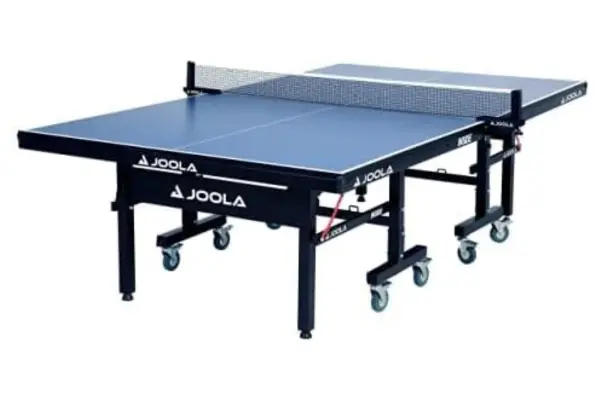
Key Specs:
- Thickness: 25mm painted MDF surface
- Price: $700–$900
- Certification: USATT approved
- Frame: Heavy-duty 50mm powder-coated frame, 50x50mm undercarriage
- Assembly: Ships nearly pre-assembled, only 8 bolts to attach the legs
- Storage: Independent trundle system per half, nests for compact storage
The surface delivers competition-level bounce while the frame stays stable through hard rallies, a combination owner reviews consistently point to as a clear step up from 15–19mm recreational tables.
Pros
- True, consistent bounce confirmed across owner reviews
- Fast setup for its performance tier
- Independent per-half transport, easier to move solo than most 25mm tables
Cons
- Priced above the true beginner range
- Heavy at 25mm, two-person setup still recommended
One table, no upgrade needed later; it delivers tournament-grade bounce without tournament-grade pricing, so the “will I outgrow this? question never really comes up.
2. Best for Beginners: JOOLA Inside Professional
For decades, JOOLA’s Inside series has been the default recommendation for anyone buying their first real table tennis table, and the reason isn’t hype: it’s one of the few tables that manages to feel more capable than its price tag suggests, without pretending to be something it’s not.
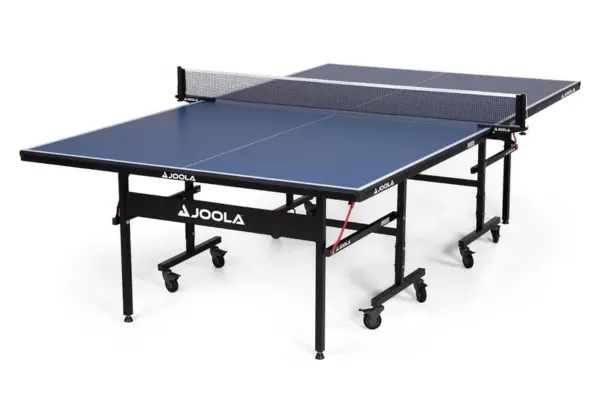
Key Specs:
- Thickness: 15mm MDF/wood composite surface
- Price: $349–$450
- Certification: USATT approved (not ITTF approved)
- Frame: Powder-coated steel, 1.5″ diameter legs, corner protectors
- Assembly: ~15–20 minutes, quick-clamp net and post set included
- Weight: ~137–190 lbs depending on thickness tier
- Storage: Two independent halves, each on 4 locking casters, nest together when folded
The bounce is consistent and even across the surface with no dead spots, and the split-half design means one person can genuinely manage setup and moving alone, a real advantage over heavier single-piece tables at this price.
Pros
- Fast, genuinely easy assembly (15–30 min)
- Split-half design makes solo setup and storage simple
- Club-quality net included, not the usual budget filler
- Decade-long track record as a top-reviewed recreational table
Cons
- 15mm surface won’t hold up if you outgrow recreational play
- Indoor only, reported warping in humid or high-heat storage
The rare first table that isn’t a compromise dressed up as one, if you outgrow the 15mm bounce, the 18mm version in the same line makes upgrading painless. If you’re new to the game. Pair this table with our Best Table Tennis Rackets for Beginners for a complete starter setup.
3. Best for Competitive/Serious Training: Butterfly Centrefold 25
This is Butterfly’s best-selling table for a reason: it’s the official table of the U.S. Open and U.S. Nationals through 2026, and the 25mm Perfect Grip surface delivers exactly the direct spin transmission and true bounce serious players are training for.
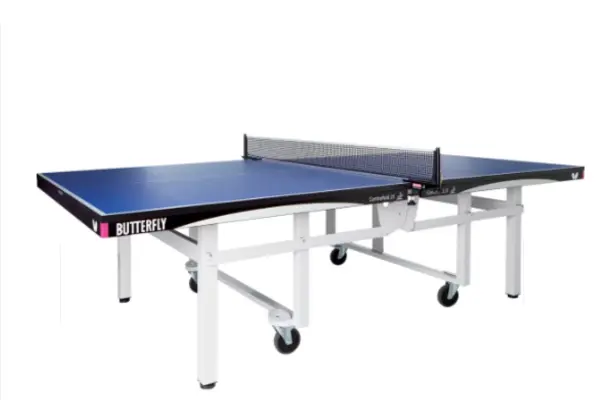
Key Specs:
- Thickness: 25mm Perfect Grip top, reinforced steel rail
- Price: $2,399 – $2,783.99
- Certification: ITTF + Paralympic compliant
- Assembly: Fully pre-assembled out of the box
- Weight: 280 lbs
- Warranty: 5 years, made in Germany
Owner reviews consistently rate the bounce and spin response as best-in-class, and the steel-rail reinforcement keeps that consistent across the full surface, not just the center, a real difference from tables that only feel true at the middle of the table.
Pros
- Genuine ITTF and Paralympic certification
- Arrives fully assembled
- Best-in-class bounce and spin, confirmed by long-term owners
Cons
- No playback mode
- 280 lbs, difficult to move solo
- Some owners report center sag if the floor isn’t level
If budget isn’t the constraint, this won’t be the limiting factor in your training; just level the floor first. Serious training requires a serious racket, too. See our Best Professional Table Tennis Racket guide to build a competition-ready setup.
4. Best Value: JOOLA Rally TL Professional
JOOLA has a habit of building tables that punch above their price class, and the Rally TL targets the real gap between budget recreational tables and expensive competition models.
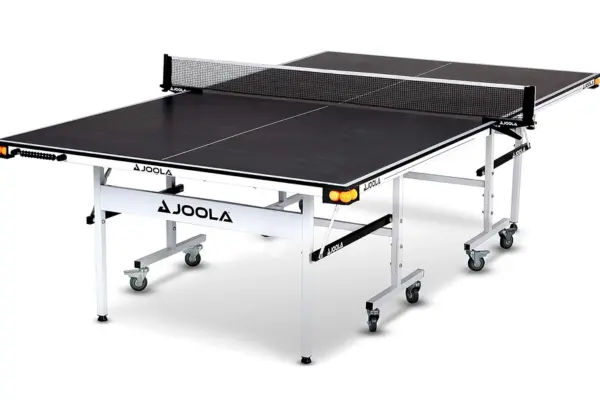
Key Specs:
- Thickness: 15mm or 18mm (18mm is the sweet spot)
- Price: $400–$700 depending on tier
- Certification: USATT approved (not ITTF)
- Frame: 30mm steel apron, 40mm square legs
- Assembly: ~10–30 minutes, two people recommended
- Extras: Corner ball holders, abacus scorers, playback mode included
The bounce is consistent and crisp on the 18mm version, enough for developing real technique rather than just casual rallies, and the steel undercarriage holds steady through normal play without the wobble common at this price point.
Pros
- 18mm surface is a real step up from 15mm without competition pricing
- Playback mode and quality net included standard
- Sturdy frame, no notable wobble in owner reviews
Cons
- Not ITTF-certified despite tournament-quality marketing
- 90+ lbs halves make solo assembly difficult
The clearest step-up pick without overpaying: get the 18mm version specifically.
5. Best for Home/Family Use: Butterfly Active 19 Home
The Active 19 Home earns its spot by doing the unglamorous thing well: a real 19mm bounce, genuinely fast setup, and an 8-wheel rollaway design built specifically for a family that wants to fold it up and reclaim the room afterward.
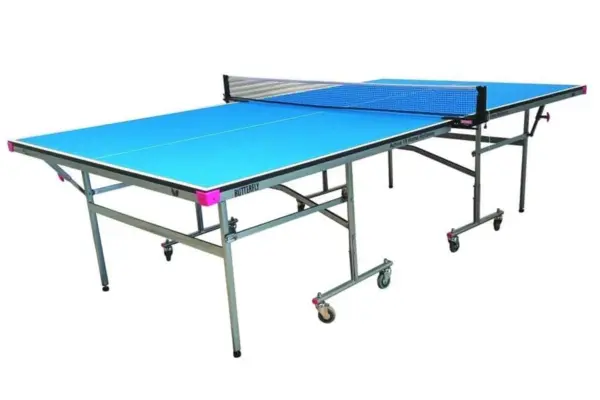
Key Specs:
- Thickness: 19mm top
- Price: $700–$900
- Certification: USATT approved for sanctioned tournament play
- Frame: Steel frame, single metal crossing brace for lateral stability, foot-screw leg levelers
- Assembly: ~15 minutes (some retailers list up to 45–60 min for full rollaway setup)
- Weight: ~165–190 lbs depending on listing
- Warranty: 3 years
The crossing brace between the end legs is a small detail most tables at this price skip, and it’s the reason owners report solid stability even on uneven garage or basement floors once the foot-screws are leveled.
Pros
- 19mm bounce, a real step up from entry-level tables
- Foot-screw levelers handle uneven floors well
- Butterfly build quality, genuine 3-year warranty
Cons
- Assembly time varies widely by retailer, budget more than listed
- Heavier than JOOLA Inside, harder to move solo
A durable step-up from entry-level without competing pricing, the leveling feet and crossing brace are the quiet details that justify the Butterfly name.
6. Best Outdoor: Cornilleau 300X
The 300X stands out from JOOLA and Killerspin’s outdoor lines on one specific point: warranty, a real signal of confidence in weatherproofing that most competitors don’t back nearly as long.
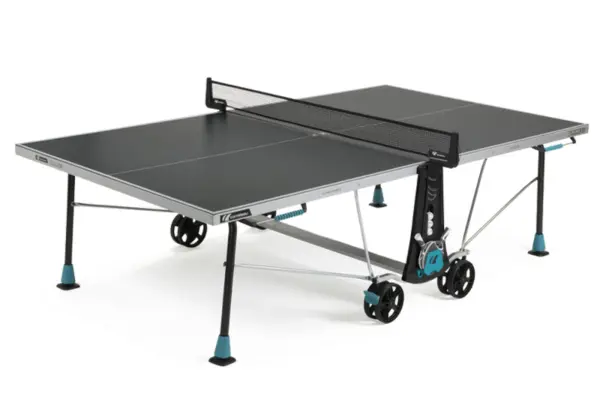
Key Specs:
- Thickness: 5mm resin laminate (SOFTMAT anti-glare coating)
- Price: ~$1,350
- Certification: Not ITTF (EN 14468 Class C, FFTT leisure approval)
- Frame: Aluzinc corrosion-resistant, 16-point DSI locking system, adjustable 3D leg pads
- Assembly: 2–3 hours, longer than typical indoor tables
- Warranty: 10 years on the tabletop
The 16-point locking system and adjustable leg pads are the details that actually matter outdoors; they’re what let the table hold a consistent, level bounce on an uneven patio or lawn where a standard fixed-foot table would wobble. For more options at every price, my best outdoor table tennis table guide compares six picks by climate, space, and budget.
Pros
- 10-year warranty, far beyond the 1-year standard on most outdoor tables
- Handles uneven patios/lawns well via adjustable leg pads
- Anti-glare coating genuinely reduces sun interference outdoors
Cons
- Assembly is notably longer than indoor tables
- Not ITTF-certified; the resin surface bounce differs from MDF
The clear pick for a permanent outdoor setup, the warranty alone justifies the price over cheaper weatherproof alternatives. Not sure you need outdoor at all? Our Indoor vs Outdoor table tennis table guide settles it.
7. Best Premium / Statement Piece: Killerspin Revolution SVR
This is less a practical buy and more a centerpiece for a serious home game room: an arched steel base wrapped in Alubond aluminum panels, built-in ball/paddle storage drawers, and a design distinctive enough that reviewers regularly call it a conversation piece as much as a table.
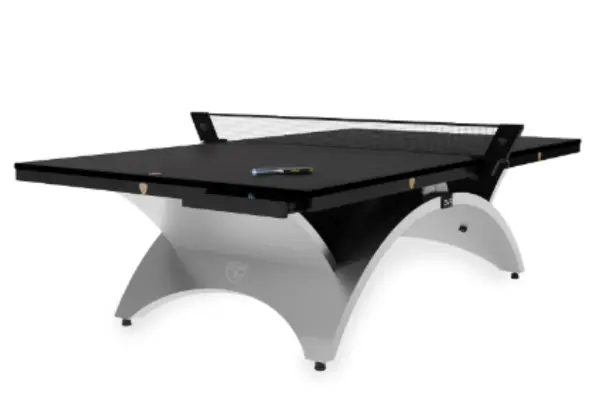
Key Specs:
- Thickness: 25mm MDF top
- Price: ~$3,899 depending on finish
- Certification: Tournament-quality construction
- Frame: Arched steel base, Alubond aluminum side panels, four drop-down wheeled legs
- Assembly: ~1 hour
- Extras: Built-in storage drawers (fits 2 paddles + 7 balls each), premium net set included
The glare-reducing coating and silkscreened lines (rather than paint or tape) are genuine performance details, not just styling; they hold up better over years of play than cheaper printed surfaces.
Pros
- Distinctive design that doubles as a room centerpiece, confirmed repeatedly in owner reviews
- Built-in storage drawers, a genuinely useful detail no competitor on this list includes
- Premium net set and glare-reducing coating included standard
Cons
- No playback/solo practice mode, confirmed by multiple owner reviews
- Heavy and described as difficult to relocate once assembled
If the table needs to look as premium as it plays, this earns the price tag, just don’t expect to move it around the house, or practice solo.
8. Best for Small Spaces: Conversion Top (MD Sports 4-Piece)
The option almost nobody selling a full table will mention, because it’s the cheapest one on this list by far, and it solves a real problem: needing table tennis without dedicating permanent floor space to it.
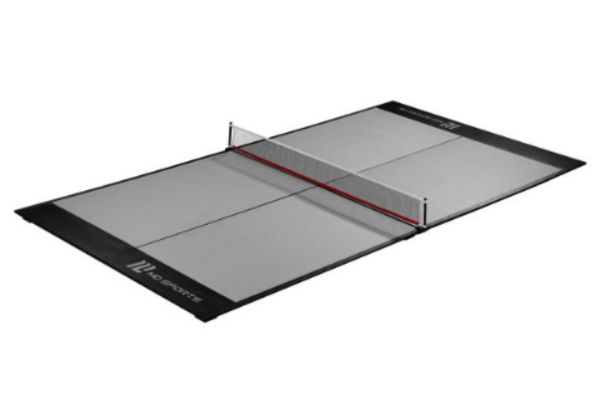
Key Specs:
- Thickness: 9mm laminated engineered wood playfield
- Price: Under $120
- Certification: None, not ITTF or USATT approved
- Size: ~7′ x 3.7–3.8′ (smaller than regulation 9’x5′)
- Storage: Folds to roughly 42″ x 22″
- Construction: 4-piece pre-assembled with hinges, EVA foam padding on the underside to protect furniture
It sits directly on an existing table, pool, air hockey, or dining table, rather than needing its own dedicated legs, which is the entire point: real table tennis without a permanent footprint.
Pros
- By far the cheapest entry point on this list
- Genuinely easy to fold, store, and transport to a friend’s house
- EVA foam padding protects the surface it sits on
Cons
- Smaller than the regulation size, a real limitation for anyone used to a full table
- Multiple owners report sagging in the middle without a support leg underneath
- Bounce is noticeably softer than a dedicated table, per owner reviews
Not a replacement for a real table if you’re serious, but for tight spaces or occasional family fun, it delivers real table tennis where a full table simply wouldn’t fit. And once you’ve got the table sorted, check out our complete guide to table tennis balls to make sure your balls match your new setup.
Best Table Tennis Tables: Quick Comparison Table
If you’ve read through the full reviews above, here’s everything side by side for a final scan before you decide: thickness, price, certification, and the single best-fit reason for each table, so you can compare your shortlist at a glance without scrolling back up through eight separate write-ups.
| Table | Category | Thickness | Approx. Price | ITTF/Tournament Approved | Best For |
|---|---|---|---|---|---|
| JOOLA Tour 2500 | Best Overall | 25mm | $700–$900 | USATT approved | Won’t need replacing as skill improves |
| JOOLA Inside Professional | Best for Beginners | MDF, recreational | $349–$450 | USATT approved (not ITTF — too thin) | First real (non-toy) table |
| Butterfly Centrefold 25 | Best for Competitive Training | 25mm | ~$2,399-$2,783.99 | ITTF + Para compliant | Won’t be the limiting factor in training |
| JOOLA Rally TL Professional | Best Value | 15mm/18mm | $400–$700 | USATT approved (not ITTF) | Step up from budget without competition pricing |
| Butterfly Active 19 Home | Best for Home/Family | 19mm | $700–$900 | USATT approved | Durability beyond a starter table |
| Cornilleau 300X | Best Outdoor | 5mm resin laminate | ~$1,350 | EN 14468 Class C (not ITTF) | Permanent backyard/patio setups |
| Killerspin Revolution SVR | Best Premium/Statement | 25mm MDF top | $3899 | Varies by finish (verify per model) | Design-forward home game rooms |
| Conversion Top (MD Sports-style) | Best for Small Spaces | N/A | Under $120 | No | Apartments, no dedicated floor space |
| ???? Prices and availability verified July 2026. All links go to verified sellers. | |||||
Indoor vs. Outdoor vs. Conversion Top
Beyond the individual reviews above, it’s worth understanding the three broad categories they fall into. Since picking the wrong category for your space is the single most common and most expensive mistake table tennis buyers make. Here’s how the three options actually compare before you decide.
| Category | Surface | Best For | Key Tradeoff |
|---|---|---|---|
| Indoor | MDF (high-density fiberboard) | Best possible bounce and feel | Warps if exposed to humidity or heat, indoor-only, no exceptions |
| Outdoor | Aluminum composite or resin | Permanent backyard/patio setups | Slightly less lively bounce than MDF, real tradeoff for weatherproofing |
| Conversion Top | Laminated wood, sits on existing furniture | Small spaces, no dedicated floor space | Non-regulation height, not built for serious training |
| ???? Choose the right table surface based on your playing environment and priorities. | |||
If there’s any chance the space isn’t consistently dry and temperature-stable, don’t buy indoor even if it technically fits; the warping isn’t a maybe. Outdoor is the only real answer for a permanent backyard setup, and a conversion top is the honest budget option most guides skip entirely, genuinely underrated for casual family play.
Key Factors to Consider Before Buying
Before the common mistakes below, it’s worth pulling together what actually separates a good table from a disappointing one into one place. Most of these factors are covered in more depth earlier in this guide, but a buyer skimming for the essentials before checking out deserves the short version too.
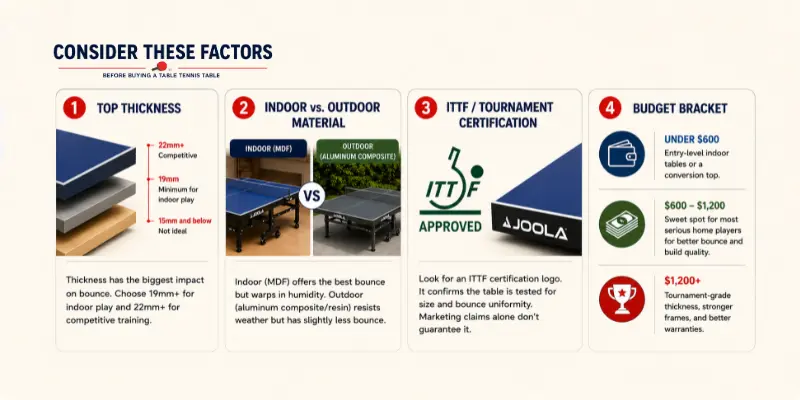
1. Top Thickness
This is the single biggest factor in bounce quality, more than brand, price, or marketing language. Look for a minimum of 19mm for real indoor play, and 22mm or higher if you’re training competitively; anything thinner will noticeably hold back technique development.
2. Indoor vs. Outdoor Material
MDF, used on indoor tables, gives the best possible bounce and feel, but it warps in humid conditions without exception. Aluminum composite or resin, used on outdoor tables, trades a little bounce quality for genuine weather resistance, and picking the wrong one for your space is the most common expensive mistake buyers make.
3. ITTF/Tournament Certification
An actual certification logo on the spec sheet means the table has been independently tested for dimensional accuracy and bounce uniformity, not just claimed. Marketing phrases like tournament-ready or competition-grade carry no regulatory weight on their own, so it’s worth checking the certification explicitly rather than trusting the copy.
4. Budget Bracket
The under $600 typically covers entry-level indoor tables or a conversion top, while $600 to $1,200 is where most serious home players land for a genuine step up in bounce and build quality. Above $1,200 buys tournament-grade thickness, sturdier frames, and meaningfully better warranties, not just a bigger price tag.
Thickness and material determine how the table actually plays, certification tells you whether the marketing is telling the truth, and budget tells you which tier to shop in. Get these four right, and everything else on this page is just detail. Thickness and material matter, but so does your racket’s construction. Learn more in our Table Tennis Blade: A complete guide to types, materials & selection.
Mistakes to Avoid When Buying a Table Tennis Table
A few patterns come up again and again in buyer reviews and forum discussions across every table on this list, and they’re not really about picking the wrong brand; they’re about skipping five minutes of prep that would have caught the problem before it became an expensive one.
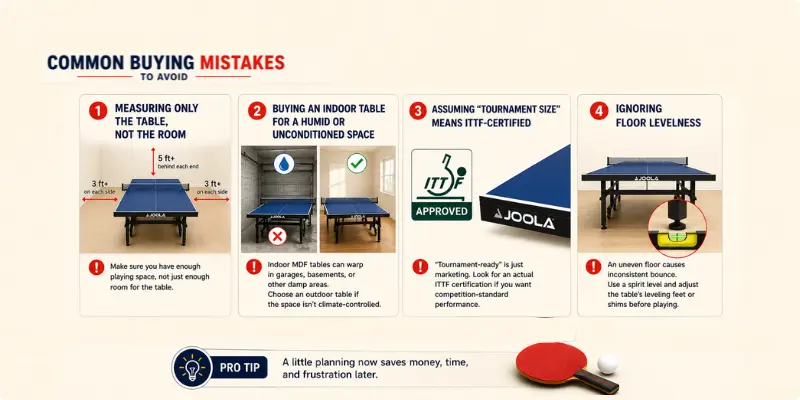
1. Measuring only the table, not the room.
The table itself is 9ft × 5ft, but you need real clearance behind each end (5ft+) and each side (3ft+) for full swings, and a table that fits the room on paper can still make the room unplayable once you’re actually swinging. Running the numbers through a room size calculator before buying, not after, catches this every time.
2. Buying indoor for a humid or unconditioned space.
An indoor MDF table left in a garage, basement, or anywhere without stable temperature and humidity will absorb moisture and warp within a season, permanently ruining the bounce no matter how well it played on day one. If there’s any real chance the space isn’t consistently dry and climate-controlled, buying outdoor-rated instead is the only real safeguard, even if the table technically fits indoors.
3. Assuming Tournament Size means ITTF-certified.
Marketing language like tournament-ready or competition-grade has no regulatory weight on its own; only tables carrying an actual ITTF certification logo have been independently tested for dimensional accuracy and bounce uniformity. Checking the spec sheet for that certification explicitly, rather than trusting the copy, is the only way to know for sure.
4. Ignoring floor levelness.
An uneven floor, common in garages and basements, causes inconsistent bounce that no table thickness can fix, and the ITTF allows only a 1% slope maximum even for competition tables. A quick check with a spirit level before setup catches most cases, and self-leveling feet or shims solve the rest.
Every one of these mistakes gets caught by five minutes of prep before you buy, not after. Measure the room, check the climate, verify the certification, and level the floor, and you’ll avoid the regrets that show up again and again in owner reviews.
Our Verdict: Which Table Should You Actually Buy?
Eight tables, eight different real-world situations, and honestly, there’s no single best table tennis table, only the best one for how you’ll actually use it. After weighing specs, certification, price, and real owner feedback against the buying situations that matter most, here’s the short version if you don’t want to re-read the full breakdown.
- Best overall: JOOLA Tour 2500 genuinely bridges recreational and professional play, so it won’t need replacing as you improve.
- Best for beginners/family: JOOLA Inside Professional — real MDF bounce at a genuinely recreational price.
- Best for small spaces: MD Sports-style conversion top — more usable playing experience per dollar than any dedicated compact table.
- Best for serious/competitive training: Butterfly Centrefold 25 — official U.S. Nationals table, ITTF-approved with a 5-year warranty.
- Best value: JOOLA Rally TL Professional — the 18mm version is a genuine step up from budget tables without competition-tier pricing.
- Best outdoor: Cornilleau 300X — the only table on this list backed by a 10-year warranty against the weather.
Start from the three questions in Section 1, not the price tag, thickness, and space requirements, which will always narrow the field faster than budget alone, and any of these six picks will genuinely outperform a random best-of list built on marketing copy instead of real specs. If you already have a table and are just upgrading your racket? Check out Best Table Tennis Rackets: Tested and ranked for every level for our top picks.
Final Thoughts
Picking the best table tennis table doesn’t have to mean wading through marketing copy that calls everything tournament-grade. Once you know that thickness, not price, is the real driver of how a table plays, the eight picks in this guide cover every real situation you’re likely to be shopping for, from a first family table to serious competitive training.
Start with the three questions in Section 1 if you haven’t already; they’ll narrow your choice faster than any spec sheet. And once you’ve settled on thickness and category, the right table is simply the one that fits your space, your budget, and how seriously you actually play.
Before you buy, double-check your space with our Table Tennis Room Size Calculator: to check if your table really fits. It takes 30 seconds and saves you from an expensive mistake.
FAQs
What is the best table tennis table for a beginner at home?
For most beginners, a 15–19mm indoor recreational table (like the JOOLA Inside Professional) offers the best balance of bounce quality and price. You don’t need tournament-grade thickness until you’re training seriously and regularly.
Is an outdoor table tennis table worth it?
Yes, if you genuinely intend to keep it outside permanently. Outdoor tables trade a small amount of bounce consistency for weatherproofing that indoor MDF tables simply cannot survive. Buying an indoor table “for now” and moving it outside later is a common and expensive mistake.
How much should I spend on a table tennis table?
Most serious home players land in the $600–$1,200 range, which typically covers 16–22mm tables with ITTF approval. Under $600 is genuinely fine for casual family play; $1,200+ is for players who will notice and benefit from tournament-grade thickness and frame stability.
What’s the difference between a $500 and a $2,000 table?
Rarely is the core bounce quality if both are the same thickness. The price difference is almost always frame durability, warranty length, storage features, and finish quality, not a fundamentally different playing experience at the same mm rating.
Can I use an indoor table outside?
No, not for any meaningful length of time. Indoor tables use MDF or particleboard tops that absorb moisture and warp when exposed to humidity or rain, permanently damaging the bounce. If outdoor use is even a possibility, buy an outdoor-rated table from the start.
Please Write Your Comments