Best Table Tennis Racket for Spin (2026): Top 6 Picks for Maximum Rotation
Updated: July 16, 2026
928
Ever watched a player make the ball dip violently onto the table or curve around the net like it’s defying physics? That’s spin, and it’s the single most powerful weapon in table tennis.
But here’s the truth: even the best technique won’t generate heavy spin if your racket can’t grip the ball. A dead rubber or a stiff blade turns your loops into floaty, attackable returns. That’s why finding the best table tennis racket for spin matters as much as your stroke; the right racket makes spin feel effortless.
In this guide, we’ve tested and compared the top 6 best table tennis rackets for spin in 2026. Whether you’re a beginner learning to brush the ball or an advanced looper seeking maximum rotation, there’s a pick here for you.
Our top pick for most players is the Killerspin JET800 Speed N2, built for aggressive topspin generation. But depending on your skill level and budget, another racket on this list might suit you better.
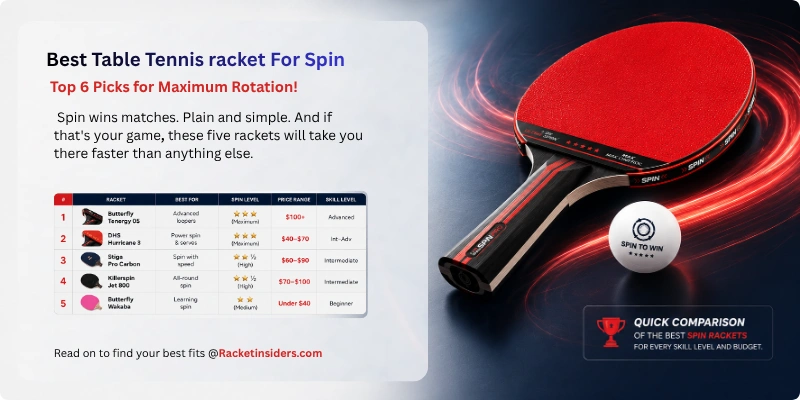
Table of Contents
Why Trust This Guide
This guide is reviewed by Sufyan Faizi, a competitive table tennis player and coach with club and collegiate experience. Picks are based on ITTF specs, manufacturer data, and verified player feedback, not brand reputation or ad spend. We re-evaluate this list annually; last updated 2026.
Best Table Tennis Racket for Spin: Quick Picks
Want the top picks upfront? Here’s our complete ranking of the best table tennis rackets for spin in 2026, based on real spin performance rather than marketing claims. Each one made the cut for a different reason, a different skill level, budget, or playing style, so the best pick really depends on which row matches you.
Full reviews with specs, pros, and cons are just below if you want the details before you buy.
| Tier | Racket | Best For | Spin Level | Price Range | Skill Level |
|---|---|---|---|---|---|
| Advanced | Killerspin JET800 Speed N2 | Aggressive topspin loopers | ⭐⭐⭐ (Maximum) | $70–$100 | Advanced |
| Advanced | DHS Six-Star 6002 | Power spin & serve control | ⭐⭐⭐ (Maximum) | $60–$90 | Int–Adv |
| Intermediate | Palio Master 3.0 | Spin with technique-building control | ⭐⭐½ (High) | $40–$60 | Intermediate |
| Intermediate | STIGA Pro Carbon | Spin with speed | ⭐⭐½ (High) | $60–$90 | Intermediate |
| Beginner | PRO-SPIN Ping Pong Paddle | Learning to brush the ball | ⭐⭐ (Medium) | Under $40 | Beginner |
| Beginner | Palio Expert 3.0 | Learning spin fundamentals | ⭐⭐ (Medium) | $74.99 | Beginner |
| ???? Spin ratings indicate the maximum spin potential each racket can generate with proper technique. | |||||
Want to see how these spin-focused rackets compare to all-around options? Check out our Best Table Tennis Racket: Tested and ranked for every level.
What Makes a Racket Great for Spin?
Four factors separate real spin rackets from marketing hype, and they’re why we picked these six specifically. Most buyers focus on the brand name or the price tag and miss the specs that actually determine spin. Understanding these four lets you judge any racket on this list (or anywhere else) on its merits, not its marketing.
- Rubber surface: Tacky rubbers (DHS Six-Star 6002, Palio Expert 3.0) grip via friction; tensor-style rubbers (Killerspin JET800 Speed N2) add catapult on top of grip. Both spin heavily, just differently.
- Sponge thickness: More thickness = more dwell time = more spin. That’s why the JET800 runs 1.8mm high-tension sponge, while the Palio Expert 3.0 runs a softer 1.6–1.8mm.
- Blade flex: Slight flex extends dwell time and adds arc, why pure spin setups favor wood over carbon.
- Speed-spin tradeoff: No racket maxes all three at once. Every pick below prioritizes spin and control over raw speed.
The racket with the loudest spin claim isn’t always the spinniest one; the one that balances these four factors for your level usually is. For a deeper dive into how blade flex and rubber composition affect spin, visit our Table Tennis Racket guide. For the specific tradeoff between 5-ply and 7-ply construction, see our full ply comparison.
Best Table Tennis Rackets for Spin: Full Reviews 2026
Choosing the right racket can make or break your ability to generate consistent, heavy spin. Get it right, and your loops bite hard; get it wrong, and you’re fighting the rubber all night. We’ve tested dozens of spin-focused rackets. Most claim maximum spin but deliver dead rubber and zero grip. The six on this list actually deliver. Each review includes full specs, honest pros and cons, and a straight bottom line.
1. Best Spin Rackets for Advanced & Offensive Players
This tier is built for players with consistent, committed strokes who want to generate maximum rotation without holding back. Both rackets here reward good technique with genuinely heavy spin, but they’ll punish flat, timid contact just as fast. These are the setups serious players graduate into once their basics are locked in.
1.1 Killerspin JET800 Speed N2: Best for Aggressive Topspin Attackers
The Killerspin JET800 Speed N2 is renowned as a premium pre-made paddle for intermediate-to-advanced players. It’s built around a 7-ply layered wood and carbon fiber blade, finished with Nitrx-4Z high-tension rubbers that allow for heavy topspin and aggressive loop drives right out of the box.
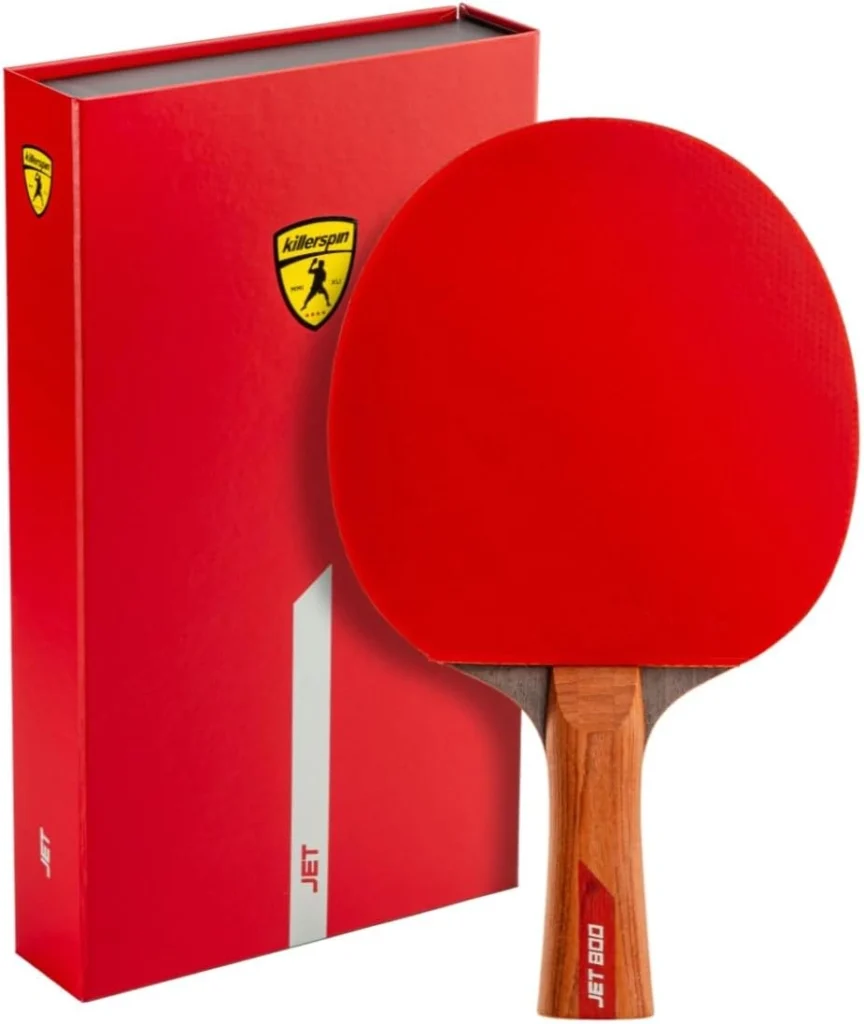
Key Specs:
- Blade: 7-Ply Wood + Carbon Layers
- Rubber: Killerspin Nitrx-4Z (ITTF approved)
- Sponge: 1.8mm
- Speed: High
- Spin: Maximum
- Control: Medium-High
- Best For: Advanced loopers, aggressive offensive attackers
- Price: $70–$100
The Nitrx-4Z rubber provides excellent grip for heavy spin generation, while the carbon layers add finishing speed once you’re ready to close out a point. The blade rewards committed, full strokes with genuinely heavy rotation.
Pros
- High spin with real finishing speed
- ITTF approved for competition
- Strong balance of control and power
Cons
- Slightly heavier than some alternatives
- Can be too fast for players still building consistency
- Premium price for a pre-made
The JET800 Speed N2 is the best table tennis racket for spin if you loop aggressively and want a complete racket rather than a custom build.
1.2 DHS Six-Star 6002: Best for Power Spin & Serve Control
The DHS Six-Star 6002 is a top pick for serious offensive shakehand players. It features tacky Hurricane 8 rubber, famous for wicked serves and heavy backspin. This is the same rubber lineage used by the Chinese national team, built for players who serve to win points outright.
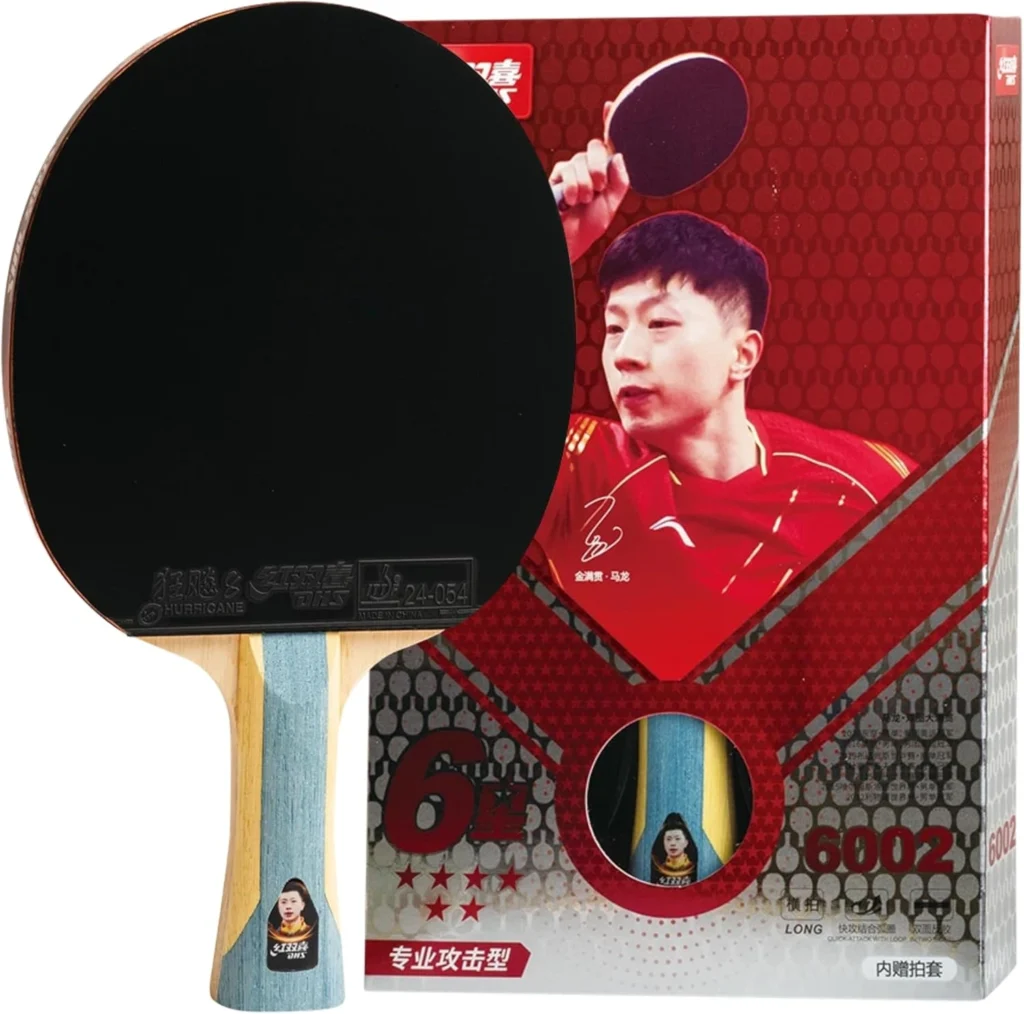
Key Specs:
- Blade: 5-Ply Wood, shakehand grip
- Rubber: DHS Hurricane 8 (tacky Chinese rubber)
- Sponge: 2.2mm
- Speed: Medium-High
- Spin: Maximum
- Control: Medium
- Best For: Power spin players, serve-focused attackers
- Price: $60–$90
The tacky topsheet creates exceptional dwell time, letting you wrap the ball in rubber before launching it. It requires strong strokes but delivers devastating spin when activated.
Pros
- Unmatched spin on serves and slow loops
- Excellent control for spin placement
- Complete racket at a fraction of custom-build pricing
Cons
- Demands strong, well-executed strokes
- Not ideal for beginners or casual players
- Slower off the bounce than tensor-style rackets
The spin king for players with good technique who want maximum spin in a complete racket without paying premium custom-build prices. For advanced players seeking even more performance, explore our Best Professional Table Tennis Rackets roundup.
2. Best Spin Rackets for Intermediate Players & Control
This tier bridges the gap between learning spin and attacking with it, giving you enough grip to build heavier rotation while keeping enough control that rallies don’t fall apart. Both rackets here suit players ready to push their spin further without the steep learning curve of a fully offensive setup.
2.1 Palio Master 3.0: Best for Building Spin Technique
The Palio Master 3.0 is widely praised for building technique. Palio’s premium rubbers are stickier than typical factory rubbers, giving heavy spin without sacrificing control. It’s the go-to pick for players past the beginner stage who aren’t chasing max power yet.
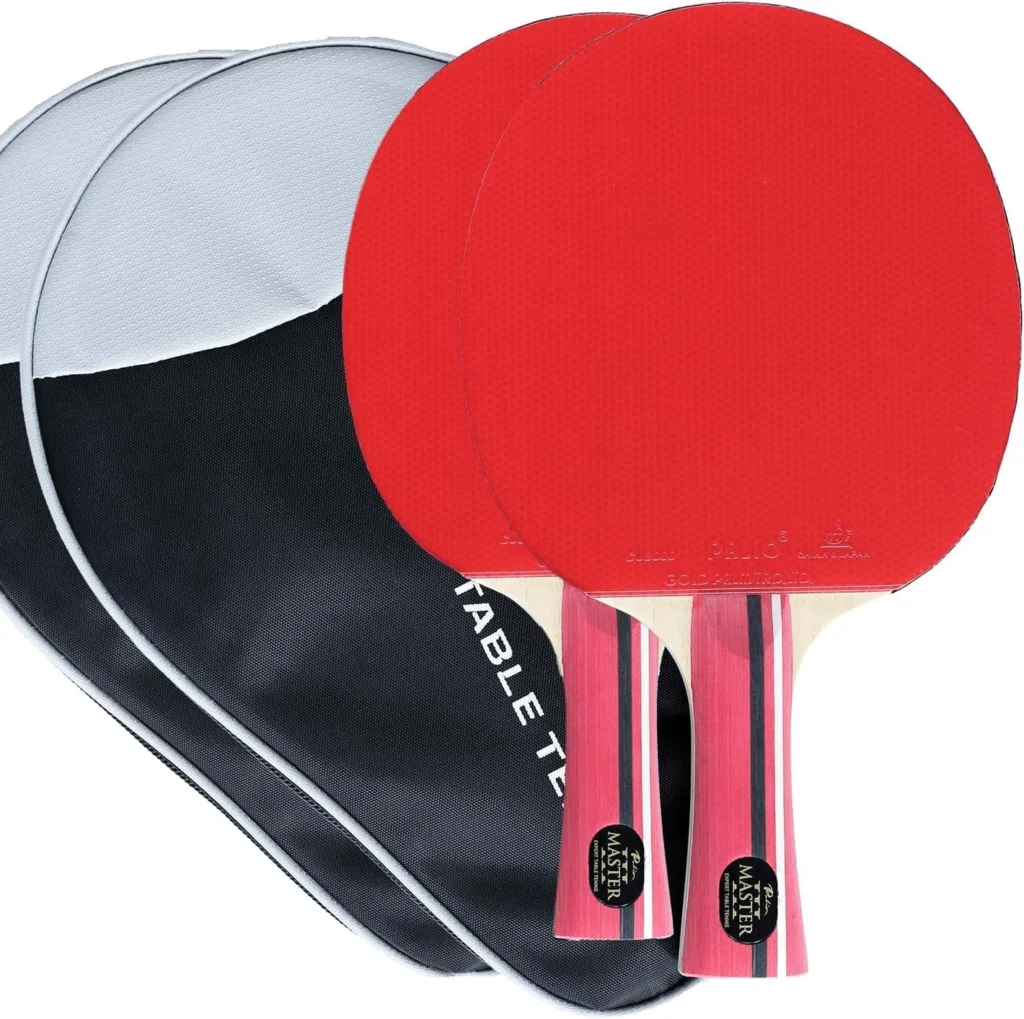
Key Specs:
- Blade: 5-Ply Wood
- Rubber: Palio premium tacky inverted
- Sponge: 1.8–2.0mm
- Speed: Medium
- Spin: High
- Control: High
- Best For: Intermediate players developing spin technique
- Price: $40–$60
The stickier-than-average rubber grips the ball longer through contact, giving you a genuine feel for how brushing generates rotation, while the softer sponge keeps shots from sailing long.
Pros
- High spin with strong control for the price
- Great for developing proper brush technique
- ITTF-approved for competitive play
Cons
- Spin ceiling lower than pure offensive setups
- Not built for players chasing maximum finishing speed
- Less durable than premium tensor rubbers over heavy use
A genuine technique-builder for players past the beginner stage who want a racket that grows their spin game without punishing imperfect strokes.
2.2 Stiga Pro Carbon: Best for Spin with Speed
The STIGA Pro Carbon defies the usual carbon-blade tradeoff of speed over spin. It pairs a carbon blade with grippy rubber for a rare spin-speed combo. Most offensive pre-mades force a choice between the two; this one delivers both in one ITTF-approved package.
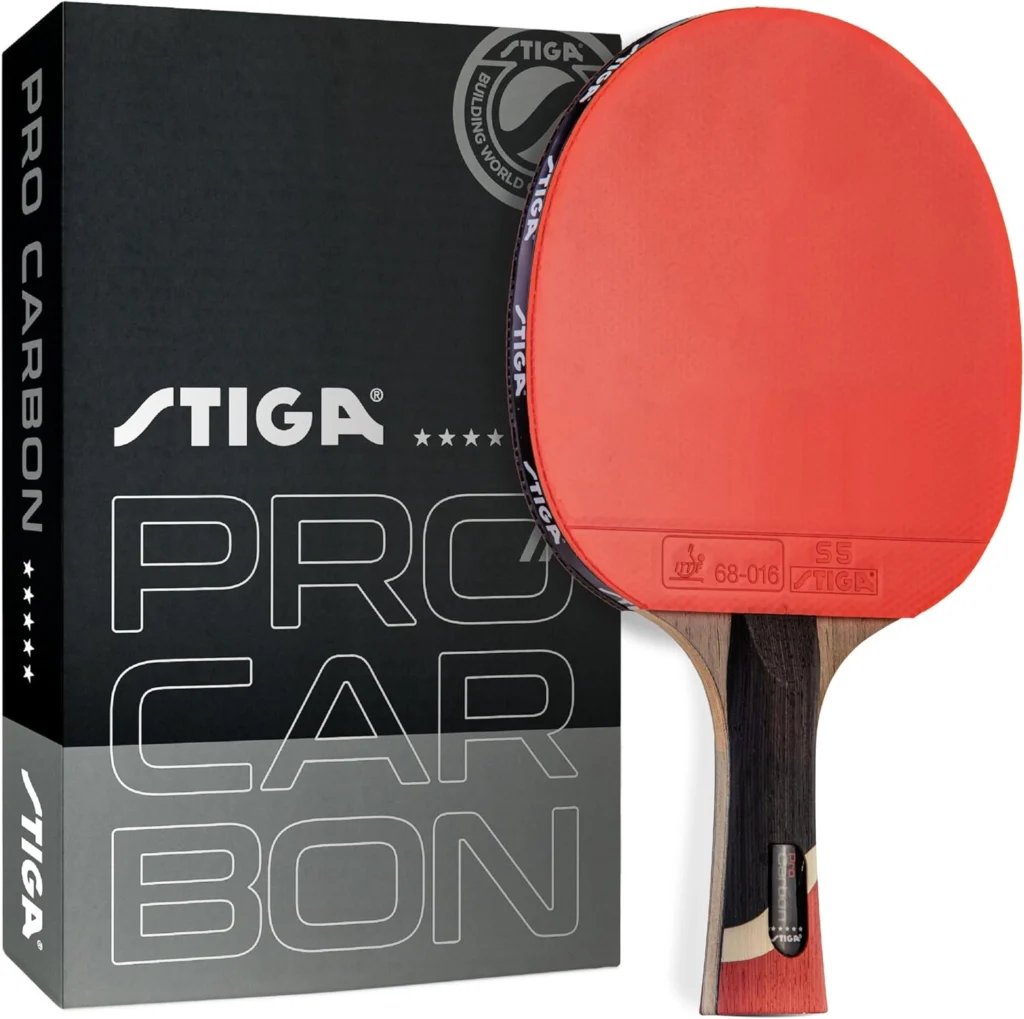
Key Specs:
- Blade: 7-Ply Wood + Carbon Layers
- Rubber: Stiga S5 inverted (ITTF approved)
- Sponge: 2.0mm
- Speed: Very High
- Spin: High
- Control: Medium
- Best For: Offensive players who want spin + speed balance
- Price: $60–$90
Most carbon blades sacrifice spin for speed. The Pro Carbon’s S5 rubber maintains spin potential even on fast shots, while the carbon layers add power.
Pros
- Excellent spin for a carbon pre-made
- High speed for offensive play
- ITTF approved for competition
Cons
- Less spin than pure spin-focused rubbers in the advanced tier.
- Can be too fast for raw beginners
- Carbon feel may feel stiff to all-wood users
The best spin-focused pre-made racket for offensive players, who don’t want to give up speed; a fantastic all-round option for aggressive counter-loopers. If you’re an intermediate player looking for more options, check out our Best Table Tennis Racket for Intermediate Players guide.
3. Best Spin Rackets for Beginners
This tier is about building real spin fundamentals, not chasing speed or power you don’t need yet. Both rackets here use forgiving, moderate-speed rubber so you can focus on brushing the ball correctly instead of fighting the equipment. Start here, and the upgrade to faster gear later will feel natural instead of overwhelming.
3.1 PRO-SPIN Ping Pong Paddle: Best for Learning to Brush the Ball
The PRO-SPIN Ping Pong Paddle is perfect for casual or improving players. Its 5-ply all-wood construction offers the flexibility needed for brushing the ball and generating topspin, paired with slightly tacky rubber. It’s designed to make that first real topspin shot click, instead of leaving beginners guessing why the ball goes flat.
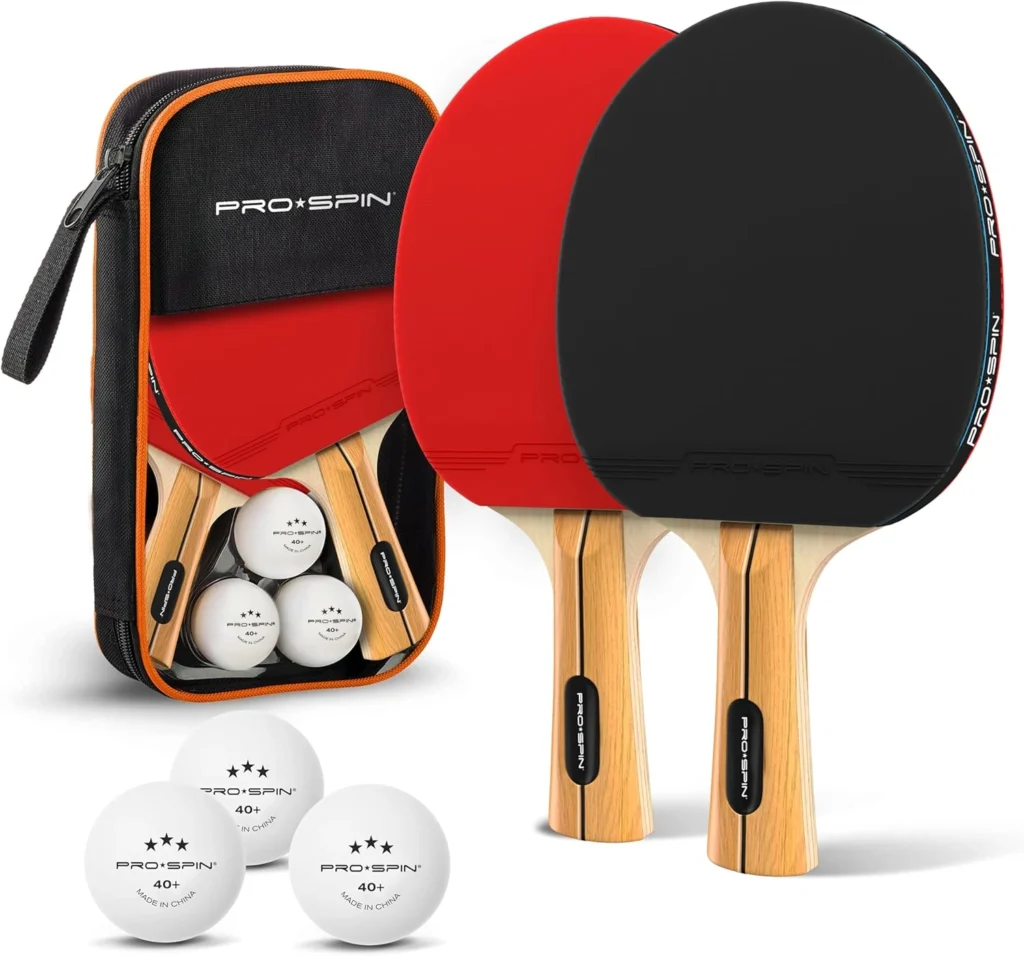
Key Specs:
- Blade: 5-Ply All-Wood
- Rubber: Slightly tacky inverted
- Sponge: 1.6mm
- Speed: Low-Medium
- Spin: Medium-High
- Control: High
- Best For: Beginners learning spin basics
- Price: Under $40
Most beginner rackets have dead rubber that makes spin impossible. The PRO-SPIN’s flexible blade and grippy rubber actually let you feel the ball bite.
Pros
- Affordable entry point for spin development
- Flexible blade helps teach proper brush contact
- High control for learning proper technique
Cons
- Limited spin ceiling as you advance
- Not suitable for intermediate or advanced players
- Slower speed may frustrate aggressive players
A great budget pick for players who want a little more brush feel while they’re still learning, an ideal first racket for anyone serious about developing real spin technique.
3.2 Palio Expert 3.0: Best Starter Bat Overall
The Palio Expert 3.0 is widely considered the best true starter bat. It uses slightly tacky Chinese-style rubber for real spin feel, paired with a softer sponge that keeps speed manageable. It tops beginner recommendation lists for exactly this reason: real spin, without punishing shaky early technique.
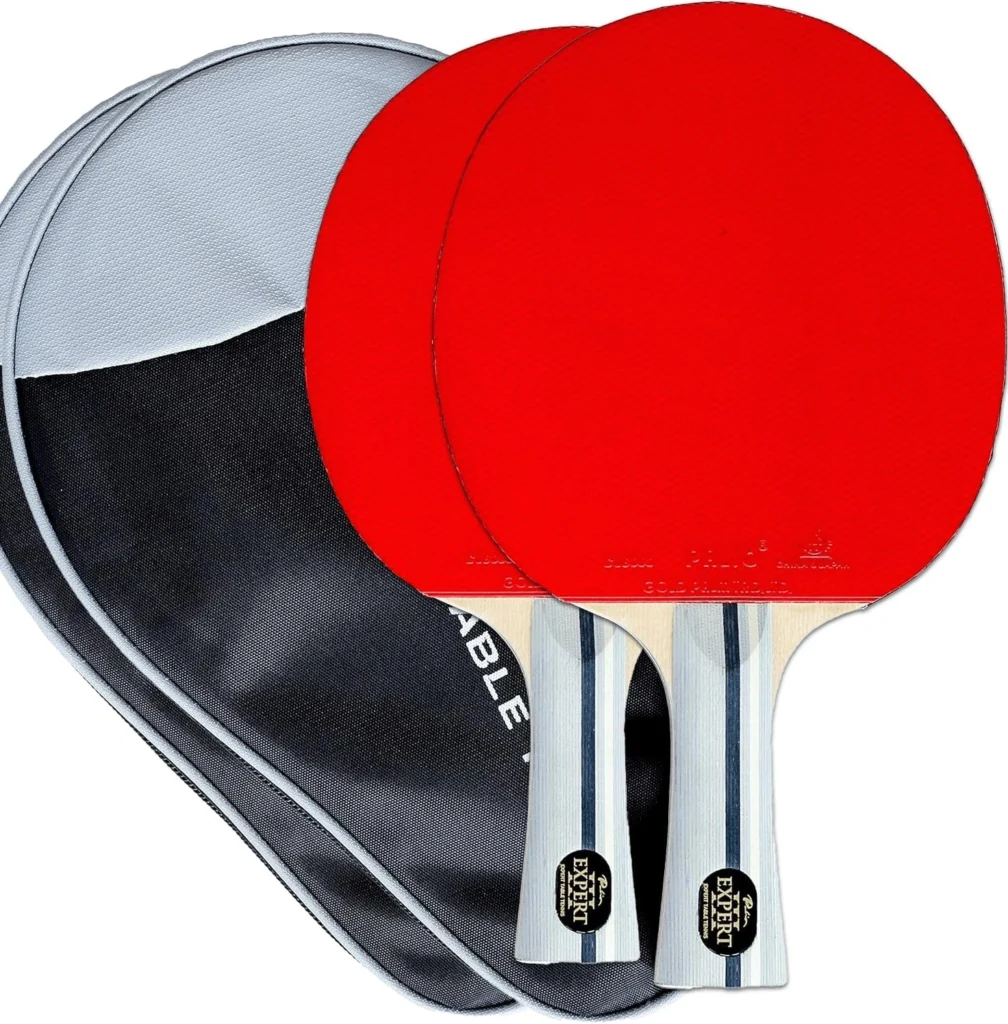
Key Specs:
- Blade: 5-Ply Wood
- Rubber: Palio tacky inverted (softer sponge)
- Sponge: 1.6–1.8mm
- Speed: Low-Medium
- Spin: Medium
- Control: High
- Best For: Beginners learning proper stroke mechanics
- Price: $74.99
The softer sponge keeps ball speed manageable so beginners can focus on stroke mechanics and spin generation without the ball constantly flying long.
Pros
- Consensus pick as the best true beginner bat
- Tacky rubber teaches real spin feel early
- ITTF approved
Cons
- Spin and speed ceiling limited for intermediate play
- Softer sponge means less catapult power as you improve
- Will need replacing once you outgrow beginner technique
The most forgiving place to start. If you’re brand new to table tennis and want to develop spin fundamentals the right way, start here. This is our top pick for beginners overall. See the full list in our Best Table Tennis Racket for Beginners guide.
Side-by-Side Comparison: All Six Spin Rackets
Every racket on this list spins the ball well. The question is, which one spins it the way you play? Spin, speed, control, and price, all lined up so you can see exactly where each racket shines and where it compromises, plus a quick best for tag so you can match the table to your own game at a glance.
| Racket | Tier | Spin | Speed | Control | Price | Best For |
|---|---|---|---|---|---|---|
| Killerspin JET800 Speed N2 | Advanced | ⭐⭐⭐ | High | Medium-High | $70–$100 | Aggressive loopers |
| DHS Six-Star 6002 | Advanced | ⭐⭐⭐ | Medium-High | Medium | $60–$90 | Power spin players |
| Palio Master 3.0 | Intermediate | ⭐⭐½ | Medium | High | $40–$60 | Building spin technique |
| STIGA Pro Carbon | Intermediate | ⭐⭐½ | Very High | Medium | $60–$90 | Spin + speed balance |
| PRO-SPIN Ping Pong Paddle | Beginner | ⭐⭐ | Low-Medium | High | Under $40 | Learning to brush the ball |
| Palio Expert 3.0 | Beginner | ⭐⭐ | Low-Medium | High | $74.99 | Learning spin fundamentals |
| ???? Spin ratings indicate the maximum spin potential each racket can generate with proper technique. | ||||||
How to Choose the Best Spin Racket for Your Style
Choosing an ideal spin racket depends on your skill level, playing style, and budget. The six picks above all generate real spin, but matching the right one to where you actually are as a player is what determines whether you’ll feel that spin on the table or just on paper. Don’t pick based on where you want to be in a year; pick based on where you are today.
1. By Skill Level
Spin punishes bad timing before it rewards good technique, so your current skill level matters more than your ambition here. Start with the row that matches where you are today, not where you’re aiming to be.
| Skill Level | What to Look For | Recommended |
|---|---|---|
| Beginner | Moderate speed, high control, forgiving rubber | Palio Expert 3.0 or PRO-SPIN Ping Pong Paddle |
| Intermediate | Balance of spin and speed, grippy rubber | Palio Master 3.0 or STIGA Pro Carbon |
| Advanced | Maximum spin, tacky or high-tension rubber | Killerspin JET800 Speed N2 or DHS Six-Star 6002 |
| ???? Choose the right racket based on your skill level for optimal performance and improvement. | ||
2. By Playing Style
Two players at the same skill level can need completely different rackets depending on how they actually play. A looper and a serve-focused attacker are chasing spin for different reasons, so match the row to your game plan, not just your rank.
| Style | Focus | Recommended |
|---|---|---|
| Looper (heavy topspin) | Maximum spin, high arc | Killerspin JET800 Speed N2 |
| Serve-focused | Tacky rubber for deception | DHS Six-Star 6002 |
| Technique-builder | Spin with strong control | Palio Master 3.0 |
| All-round attacker | Spin + speed balance | STIGA Pro Carbon |
| Spin learner | Forgiveness + grip | Palio Expert 3.0 or PRO-SPIN Ping Pong Paddle |
| ???? Choose your racket based on your playing style for the best performance. | ||
3. By Budget
Spin performance doesn’t scale perfectly with price; some of the spinniest options here cost far less than you’d expect. Use this table to find the best spin for whatever you’re willing to spend.
| Budget | Recommendation |
|---|---|
| Under $40 | PRO-SPIN Ping Pong Paddle |
| $74.99 | Palio Expert 3.0 |
| $40–$60 | Palio Master 3.0 |
| $60–$90 | DHS Six-Star 6002 or STIGA Pro Carbon |
| $70–$100 | Killerspin JET800 Speed N2 |
| ???? Find the best racket for your budget. Prices verified from Amazon listings. | |
There’s no single best racket on this list, only the one that matches your skill level, playing style, and budget at the same time. Cross-reference all three tables, and the racket that shows up more than once is almost always your right pick.If you re’ still unsure which tier fits you? Our Table Tennis Racket Guide walks you through every skill level.
Tacky or Tensor: Which Rubber Style Fits Your Racket?
Every racket on this list uses one of two rubber philosophies under the hood, and understanding the difference will help you know what you’re getting before you buy. Both generate serious spin, but they get there through different mechanics, and that difference changes which racket rewards your specific game.
- Tacky rubber (DHS Six-Star 6002, Palio Master 3.0, Palio Expert 3.0) grips the ball through surface friction. It rewards precise, well-executed contact and gives you strong control over exactly where your spin lands, especially on serves and slower loops.
- Tensor-style rubber (Killerspin JET800 Speed N2, STIGA Pro Carbon) adds a catapult effect on top of grip. It gives you spin plus some margin for error on imperfect strokes, and pairs well with aggressive, faster-paced looping.
Here’s how the two stack up side by side:
| Factor | Tacky Rubber | Tensor-Style Rubber |
|---|---|---|
| Spin source | Surface friction | Friction + catapult |
| Forgiveness | Lower | Higher |
| Best for | Serve spin, slow loops, precise players | All-round attacking, aggressive loopers |
| Found on | DHS Six-Star 6002, Palio Master 3.0, Palio Expert 3.0 | Killerspin JET800 Speed N2, STIGA Pro Carbon |
| ???? Tacky vs Tensor-style rubber comparison – Choose based on your playing style and budget. | ||
If your strokes aren’t consistent yet, lean toward a tacky, high-control racket like the Palio Expert 3.0 first. Once your contact point is reliable, you can step up to a tensor-style racket like the JET800 for extra catapult power. For a complete breakdown of rubber types: inverted, short pips, long pips, and anti-spin, read our Table Tennis Rubber Explained guide.
How to Spot a Fake Spin Claim
Worth knowing before you shop beyond this list, most high spin rackets you’ll find elsewhere don’t actually hold up to their claims. A little skepticism here saves you from paying premium prices for marketing copy instead of actual spin. None of these red flags apply to the six picks above, this is for when you go looking beyond them.
- Maximum speed, spin, and control: Physically implausible, these trade off against each other. Treat it as marketing copy, not a spec.
- Star ratings with no defined scale or source: Means nothing without knowing how it was measured. Look for ITTF approval and real specs instead, including ours, explained above.
- Pro-level pre-mades under $20: Genuine pro rubber costs $40+ alone. Anything cheaper is using a composite that won’t match the claim.
- No sponge thickness listed. Usually means the number is thin and unremarkable.
If a listing leans on vague superlatives instead of real specs, that’s the tell; the racket probably can’t back up the claim.
The Verdict: Which One Should You Buy?
You’ve seen the specs, the comparisons, and the buying criteria, here’s the short version if you just want the answer. If you’ve read this far and still can’t decide, that’s normal; the right pick usually comes down to just one factor that matters most to you. Match your situation to the list below and go with that pick.
- Maximum spin for advanced looping: Killerspin JET800 Speed N2 — aggressive topspin, ready out of the box
- Heavy spin on a budget with good technique: DHS Six-Star 6002 — pro-level tackiness
- Building spin technique as an intermediate: Palio Master 3.0 — spin without sacrificing control
- Spin + speed balance for offensive play: STIGA Pro Carbon — best offensive pre-made
- Learning to brush the ball as a beginner: PRO-SPIN Ping Pong Paddle — flexible, forgiving
- The safest first bat overall: Palio Expert 3.0 — the consensus starter pick
Our top recommendation for most advanced players: Killerspin JET800 Speed N2. For budget-conscious spin seekers: DHS Six-Star 6002, and for beginners, we recommend the Palio Expert 3.0. If you’re on a tight budget? See our Best Table Tennis Racket Under $50 guide for proven affordable picks.
Final Thoughts
Spin is what makes table tennis exciting, and your racket is the key to unlocking it. The best table tennis racket for spin shares the same DNA: tacky or springy rubber, the right sponge thickness, and a blade that complements your stroke, but which one fits you comes down to your skill level and budget.
The JET800 Speed N2 leads the pack for advanced loopers, while the Six-Star 6002 matches that spin at a slightly lower price for players with the technique to wield it. The Palio Master 3.0 and STIGA Pro Carbon both solve the spin-versus-control tradeoff for intermediates: the Palio leans more forgiving, the STIGA more offensive. And the PRO-SPIN and Palio Expert 3.0 are the most forgiving places to start.
Pick the racket that matches your level and budget, and the equipment side is covered. For technique and care, see our Spin Technique guide and Rubber Maintenance guide.
FAQs
What is the best table tennis racket for spin?
The Killerspin JET800 Speed N2. Its Nitrx-4Z high-tension rubber and carbon-reinforced blade deliver unmatched spin generation for advanced players. For beginners, the Palio Expert 3.0 is the best starting point.
Does a tacky rubber generate more spin than a tensor-style rubber?
Yes, but with trade-offs. Tacky rubbers (like DHS Six-Star 6002’s Hurricane 8) generate maximum spin on serves and slow loops but demand good technique. Tensor-style rubbers (like the JET800’s Nitrx-4Z) offer excellent spin with more speed and forgiveness.
How important is sponge thickness for spin?
Very important. Thicker sponges (2.0mm+) increase dwell time, allowing you to brush the ball longer for more spin. Beginners should start with 1.6–1.8mm; advanced players should use 1.8–2.2mm.
Can a pre-made racket generate good spin?
Yes. All six rackets on this list are complete, ready-to-play pre-mades that generate genuine spin; you don’t need a custom-built setup to loop heavily. The JET800 Speed N2 and Six-Star 6002 top out the spin ceiling for advanced players, while Palio and PRO-SPIN options are tuned for control while you’re learning.
How often should I replace spin-focused rubbers?
Every 6–12 months with regular play. Competitive players should replace every 3–6 months. Signs of wear: loss of tackiness, reduced grip, and difficulty generating spin. For full care instructions, see our Rubber Maintenance Guide.
Is spin more important than speed?
For most players, yes. Spin gives you control, deception, and consistency. Speed without spin is easy to block. Spin without speed still wins points through placement and deception. Prioritize spin first, then add speed.
Will a high-spin racket like the JET800 Speed N2 generate spin on its own, regardless of technique?
No racket compensates for technique, even the JET800 produces weak spin if you contact the ball flat instead of brushing it. If you want to improve your stroke mechanics specifically, see our Spin Technique Guide.
Please Write Your Comments