Table Tennis Racket Ratings: Choose the Best Racket for Speed, Spin & Control
Updated: December 28, 2025
213
Ever wondered why some rackets feel faster, spin better, or give you more control, even when they look almost the same? The secret often lies in your table tennis racket ratings.
Choosing the right racket isn’t just about brand or design; it’s about understanding the racket ratings that define performance. By learning how to read these ratings, you can compare rackets wisely and pick one that perfectly matches your playing style. Whether you’re a beginner aiming for better control or an advanced player chasing speed and spin, these insights help you select equipment that truly enhances your game.
In this guide, we break down what table tennis racket ratings really mean, why they matter, and how to interpret them so that you can make smarter choices on and off the table.
Let’s get started and find your ideal racket.
Key Takeaways
- Racket ratings show how speed, spin, and control affect performance.
- Beginners should prioritize control, while advanced players can aim for speed and spin.
- Balance matters more than chasing the highest ratings.
- Each rating helps you identify a racket that suits your skill level and playing style.
- Understanding ratings prevents confusion when comparing different rackets.
- The right-rated racket improves confidence, consistency, and overall gameplay.
What are Table Tennis Racket Ratings?
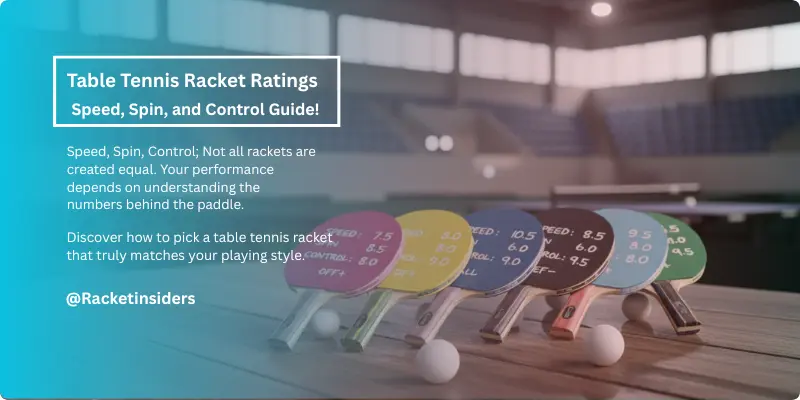
A table tennis racket rating is a numerical guide, covering speed, spin, and control, that shows how a racket performs in different aspects of the game. These ratings help players compare rackets objectively without testing each one in person.
- Speed Rating: Indicates how fast the ball travels; essential for attacking players.
- Spin Rating: Shows the racket’s ability to generate spin for topspin, backspin, or sidespin shots.
- Control Rating: Reflects how easy it is to place the ball accurately, helping beginners and defensive players stay consistent.
These ratings provide a quick snapshot of a racket’s performance, making it easier to choose one that complements your playing style and skill level. Detailed explanations follow below to help you make smarter, informed choices.
Why Understanding Racket Ratings Matters
For many players, table tennis racket ratings are more than just numbers; they’re a key to understanding how your equipment affects performance. These ratings make it easier to choose the right racket without testing every option. By showing how a racket performs in speed, spin, and control, they help players of all levels pick one that perfectly matches their skills and playing style.
- Simplifies choices: Quickly compare rackets without needing expert knowledge.
- Matches your style: Find rackets suited to attackers, defenders, or all-rounders.
- Supports learning: Guides beginners toward better control instead of chasing excessive speed.
- Builds confidence: Choose the right racket to improve consistency, precision, and enjoyment.
In short, understanding table tennis racket ratings ensures your equipment helps you grow, rather than holding you back, giving you the confidence to play smarter and perform better on the table.
The Main Rating Categories: Speed, Spin, and Control Explained
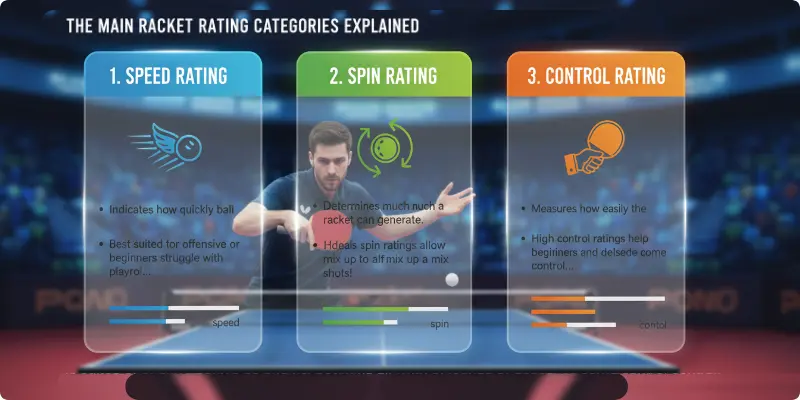
Every table tennis racket is rated across three main performance factors: speed, spin, and control. These ratings reveal how a racket behaves during play and help players understand what to expect before buying. Whether you’re aiming for fast attacks, spin-heavy rallies, or steady defense, knowing what each rating means can make all the difference in choosing a racket that fits your game.
1. Speed Rating
- Indicates how quickly the ball travels off the racket.
- Best suited for offensive or advanced players who rely on fast loops, smashes, and counter-attacks.
- Beginners may struggle with control, as faster shots require more precision.
2. Spin Rating
- Determines how much spin a racket can generate.
- Higher spin ratings allow for stronger topspin, heavier backspin, and trickier sidespin serves.
- Ideal for players who like to mix up their shots and dominate rallies with spin variation.
3. Control Rating
- Measures how easily the ball can be placed and managed during rallies.
- High control ratings help beginners and defensive players maintain accuracy and consistency.
- Advanced attackers may trade some control for increased speed and spin.
Understanding these three core ratings, speed, spin, and control, helps you make smarter equipment choices. The right balance among them depends on your skill level and playing style. By knowing what each rating represents, you can select a racket that complements your strengths and supports steady improvement over time.
Racket Ratings vs. Star Ratings: Key Differences You Must Know
When buying a table tennis racket, you’ll often see both numeric ratings and star ratings. Many players confuse them, but understanding each system helps you choose a racket that truly matches your playing style and skill level. These ratings remove guesswork and help you make confident, informed decisions, without trial and error.
1. Table Tennis Racket Numeric Ratings (Speed, Spin, Control)
These table tennis racket ratings measure real on-table performance, typically on a 0–100 scale, making it easier to compare speed, spin, and control at a glance.
- Speed Rating: Shows how fast the ball leaves the racket; ideal for attacking players.
- Spin Rating: Measures how much spin the racket can generate; perfect for topspin, backspin, or sidespin.
- Control Rating: Indicates placement accuracy; higher control helps beginners and defensive players stay consistent.
2. Table Tennis Racket Star Ratings (1–5 Stars)
Star ratings reflect a racket’s build quality and durability, with higher star counts indicating stronger construction and long-term reliability.
- 1–2 Star Rackets: Casual or beginner use; affordable and focused on control.
- 3–4 Star Rackets: Balanced for developing players; good mix of durability and performance.
- 5 Star Rackets: Premium build for advanced or competitive players; top-notch performance.
Numeric ratings explain how a racket plays, while star ratings show how well it’s built. Both are important when choosing the right table tennis racket. To better understand the materials, structure, and key specifications that influence these ratings, explore our detailed guide: Table Tennis Racket: Key Features Explained
Quick Comparison: Numeric Ratings vs. Star Ratings
To make these differences easier to understand, the table below compares table tennis racket numeric ratings and star ratings side by side. It shows what each rating measures, how the scales work, and which type of player benefits most, helping you make a quicker, more confident racket choice.
| Rating Type | What It Measures | Scale | Best For |
|---|---|---|---|
| Numeric Ratings | On-table performance (speed, spin, control) | 0–100 | All skill levels, based on rating balance |
| Speed | Ball travel speed | 0–100 | Offensive / attacking players |
| Spin | Spin generation ability | 0–100 | Spin-focused and all-round players |
| Control | Accuracy & consistency | 0–100 | Beginners & defensive players |
| Star Ratings | Build quality & durability | 1–5 stars | Casual to competitive players |
Numeric ratings tell you how a racket plays, while star ratings show how well it’s built. Using both together helps you choose a table tennis racket that performs well on the table and lasts over time.
Common Misconceptions About Table Tennis Racket Ratings
Many players misunderstand what table tennis racket ratings really mean, which can lead to poor equipment choices. Clearing up these misconceptions ensures you select a racket that truly matches your skill level and playing style.
- Higher ratings are always better: False. High-speed rackets can reduce control for beginners.
- Star ratings indicate speed: Wrong. Stars show build quality and durability, not performance.
- All brands use the same scale: Not true. Rating systems vary, so compare numbers within the same brand.
By understanding these differences, you avoid buying a racket that looks impressive on paper but doesn’t suit your game. Make informed choices and pick a racket that enhances your performance on the table.
Top Mistakes to Avoid When Choosing a Table Tennis Racket (Star Ratings Focus)
Selecting the right racket involves more than just looking at the star ratings. Many players make simple mistakes by misinterpreting what star ratings actually mean. Understanding these mistakes helps you pick a racket that truly supports your skill development and playing style. Avoid these common pitfalls:
- Chasing high stars as a beginner: 5-star rackets can be too fast or spin-heavy for novices.
- Ignoring low-star options: 1–2-star rackets offer better control for learning technique.
- Assuming stars equal performance: Stars indicate build quality and durability, not speed or spin.
- Skipping testing: Even within the same star level, comfort and feel vary.
- Relying only on brand: Popular brands don’t always guarantee the right star rating for your skill level.
Understanding star ratings ensures you choose a racket that’s durable, comfortable, and matches your current skill level, helping you avoid frustration and improve faster.
How to Choose the Right Racket Based on Ratings?
Choosing the right racket is easier once you understand how ratings work. By knowing what speed, spin, and control ratings mean, you can pick a racket that matches your skill level, playing style, and game strategy. These tips help you make confident, informed choices without trial and error.
1. Beginners
- Prioritize high control and moderate spin; 1–2 star rackets help build consistency and technique.
- Example: A Butterfly 1-star racket with Control 90+, Speed 60-70 (e.g., Control: 92, Spin: 72, Speed: 65) builds consistency without overwhelming power.
2. Intermediate
- Aim for balanced speed and spin; 3–4 star rackets improve versatility and adaptability.
- Example: A Donic 4-star all-round racket with balanced ratings (e.g., Speed: 78, Spin: 80, Control: 82) offers versatile performance for developing players
3. Advanced
- Focus on high speed and spin; premium 5-star rackets suit aggressive and competitive play.
- Example: A Stiga 5-star with Speed 90+, Spin 85+ (e.g., Speed: 94, Spin: 88, Control: 72) delivers explosive shots while maintaining a tournament feel.
When learning how to choose a table tennis racket, remember, it’s not about the highest numbers. The goal is to select a racket that complements your strengths, enhances performance, and supports steady improvement every time you step up to the table.
Table Tennis Racket Ratings: Quick Reference Guide by Skill Level
Confused about which racket ratings suit your game? This easy-to-read chart highlights the ideal speed, spin, control, and star ratings for beginners, intermediates, advanced, and defensive players. Keep it handy when comparing rackets online or in-store to find the perfect fit fast.
| Skill Level | Ideal Speed | Ideal Spin | Ideal Control | Star Rating | Best For |
|---|---|---|---|---|---|
| Beginner | 50-70 | 60-75 | 80-100 | 1-2 Stars | Building technique & control |
| Intermediate | 70-85 | 70-85 | 70-85 | 3-4 Stars | Balanced improvement |
| Advanced | 85-100 | 85-100 | 60-80 | 4-5 Stars | Aggressive attacking play |
| Defensive | 50-75 | 70-90 | 85-100 | 3-5 Stars | Strategic placement |
Use this chart as a starting point to filter rackets that match your skill and playing style. Beginners should focus on high control and moderate speed, while advanced players can aim for high speed and spin. Adjust according to your comfort and personal feel for optimal performance.
Final Thoughts
Mastering table tennis racket ratings is key to choosing equipment that truly elevates your game. These ratings show how speed, spin, and control impact performance, helping beginners focus on control while advanced players chase speed and spin. Remember, higher numbers don’t always mean better play; it’s all about the balance that fits your style. By understanding these ratings, you pick a racket that complements your strengths and boosts your confidence, precision, and consistency every time you hit the table. Choose wisely, and take your table tennis skills to the next level!
FAQs
What is a good table tennis racket rating?
A good rating depends on your skill level. Beginners should choose high control (80–100) with moderate speed/spin (60–80). Intermediates benefit from balanced ratings (70–90), while advanced players often prefer high speed and spin (90–100) for aggressive play.
How are table tennis rackets rated?
Rackets are rated for speed, spin, and control on a 0–100 scale. These numbers reflect actual performance, helping you pick a racket suited to your style.
Are higher table tennis racket ratings always better?
Not always. High speed and spin offer power but reduce control. Beginners should focus on control, while experienced players can handle faster, spin-focused rackets effectively
What do table tennis racket star ratings mean?
Star ratings (1–5) indicate build quality and durability. 1–2 stars suit beginners, 3–4 stars fit developing players, and 5 stars are for advanced or competitive use
Please Write Your Comments