Table Tennis Blade: A Complete Guide to Types, Materials & Selection
Updated: January 9, 2026
131
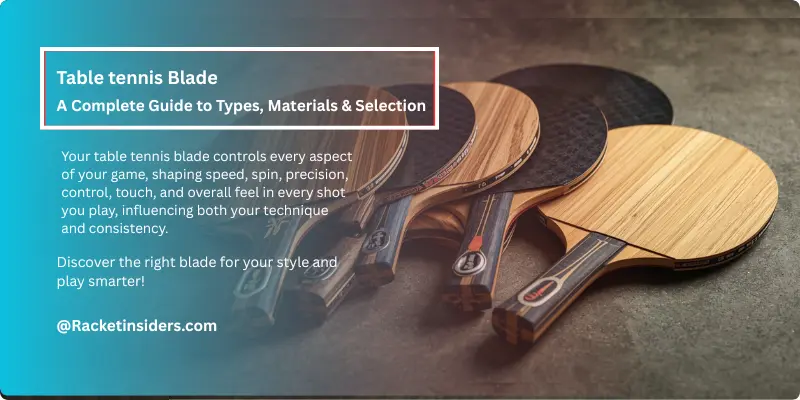
Your table tennis blade does more than hold your rubber; it shapes every shot you make, controlling speed, spin, and precision. From beginners to pros, understanding the differences in blade types, materials, and setups is key to finding the best table tennis blade for your style and elevating your game.
In table tennis, most players focus on rubbers when discussing spin and speed. But the blade, the wooden part of the racket, whether all-wood, carbon, or composite, is the true foundation of performance. A well-chosen blade can improve control, precision, and consistency, while the wrong one can hold you back, no matter how good your rubbers are. If you’re serious about improving your game, knowing how blades are built and how to choose the right one is essential.
In this guide, we’ll break down everything: what a table tennis blade is, its key components, the different types (offensive, defensive, all-round), and actionable tips for selecting the perfect blade for your style.
By the end, you’ll know exactly what to look for and what to avoid to make a confident, game-changing choice, whether you’re a beginner, intermediate, or pro.
Let’s get started.
Key Takeaways
- The table tennis blade is the core of your racket, affecting control, speed, and spin.
- Blade types: all-round, offensive, defensive, should match your playing style.
- Materials and plies impact performance: all-wood blades (Stiga Allround Classic) for control, carbon/composite blades (Butterfly Viscaria, DHS Hurricane Long 5) for speed.
- Handle type and blade face shape influence grip comfort, sweet spot, and stroke precision.
- Pros choose professional table tennis blades to maximize strengths, offensive for speed, all-round/defensive for control.
- Proper blade maintenance, avoiding moisture, heat, and careful rubber gluing, extends lifespan and preserves performance.
- Pre-made rackets suit beginners; custom blade and rubber setups allow tailored performance as skills improve.
What Is a Table Tennis Blade?
A table tennis blade is the wooden part of the racket that holds the rubber sheets. It acts as the foundation of your game, shaping speed, spin, control, and feel. Without the right blade, even the best rubbers won’t perform to their full potential, as the blade largely determines balance, vibration, and overall playability.
Blades come in different materials: all-wood, carbon, or composite, and suit players at all levels, from beginners to pros, whether focusing on offensive, defensive, or all-round play.
Key Features of a Table Tennis Blade
- Dimensions: Most blades measure about 150–160 mm in length and 150 mm in width.
- Weight: Blades typically range from 70–100 g, with lighter blades favoring control and heavier ones offering more power.
- Handle Types: Flared, straight, anatomic, or penhold, each designed to suit different grips and playing styles.
Knowing what a table tennis blade is, its key features, and the materials used helps you make a better choice. The right blade can improve control, spin, and overall performance, no matter your skill level.
Key Components of a Table Tennis Blade
A table tennis blade is more than just a piece of wood; it’s the backbone of your racket. Its design, material, ply construction, and shape directly influence how you control the ball, generate spin, and deliver power. Understanding its main components helps you choose a blade that matches your grip style, playing style, and skill level.
1. The Handle
The handle determines how comfortable your grip feels and how well you can execute strokes.
- Flared (FL): Wider at the end, secure grip, most popular among shakehand players.
- Straight (ST): Uniform thickness, allows quick grip adjustments, preferred by advanced players.
- Anatomic (AN): Curved to fit the hand’s shape, offering natural comfort.
- Penhold (CS/JP): Designed for penhold grips, shorter and rounded, ideal for offensive or all-round play.
2. The Blade Face
The blade face is the flat surface where the rubbers are attached, affecting control, spin, and shot consistency.
- Shape: Shakehand blades are oval, penhold blades are smaller and rounder.
- Size: Affects sweet spot, control, and spin generation. Larger faces usually suit defensive or all-round play.
3. The Plies (Layers)
Blades are classified by the number and type of plies, which influence stiffness, dwell time, and speed.
- All-Wood Blades (5–7 plies): Softer feel, high control, excellent for beginners learning consistency.
- Carbon/Composite Blades: Add stiffness, reduce vibration, increase speed and spin, ideal for offensive players.
- Hybrid Designs: Balance between speed and control, popular among intermediate players.
Together, these components: handle, blade face, and plies, determine how your blade feels in hand and performs on the table. Choosing the right combination of material, ply, size, and handle type ensures your racket complements your playing style, skill level, and grip, helping you maximize control, speed, and spin.
Types of Table Tennis Blades
Table tennis blades come in various types, each suited to different playing styles, skill levels, and strategies. Whether you prefer balance, attack, or defense, knowing the main categories helps you pick the blade that complements your strengths. Choosing the right blade early on not only improves your control, spin, and power but also shapes how your overall playing style develops.
1. All-Round Blades
These are the most balanced blades, making them the go-to choice for beginners and versatile players.
- Moderate speed with excellent control.
- Ideal for players still developing technique and consistency.
- Example: Stiga Allround Classic (all-wood blade, 5–7 plies).
2. Offensive Blades
Designed for aggressive players who rely on fast rallies, powerful topspins, and high-speed attacks.
- Often reinforced with carbon or composite layers for extra stiffness and power.
- Prioritize speed and spin generation over pure control.
- Example: Butterfly Viscaria (ALC carbon blade, professional-level).
3. Defensive Blades
Perfect for players who focus on patience, precision, and returning heavy attacks.
- Slower, often with larger blade heads to improve stability and control.
- Provide exceptional control for chopping, blocking, and placement.
- Example: Donic Defplay Senso (all-wood, flexible blade).
Each blade type has trade-offs, so the right choice depends on whether you value control, speed, power, or defensive reliability. Matching a blade to your playing style, skill level, and material preference is key to unlocking your full potential. Now that you understand the main blade types, you can move on to see how manufacturers rate performance to guide your selection.
👉 Check the ITTF Equipment Guide for official blade classifications.
Table Tennis Blade Ratings Explained
Table tennis blades are rated to help players understand their performance characteristics and choose the right one for their playing style, skill level, and tactical needs. These ratings indicate how a blade affects speed, spin, control, and power, guiding beginners, intermediate, and professional players in making informed choices. Manufacturers usually categorize blades using a standard system:
- DEF (Defensive): Slower, ideal for choppers and control-focused players.
- ALL (All-Round): Balanced, for versatile play, offering a mix of speed, spin, and control.
- OFF-, OFF, OFF+: Offensive levels, from controlled attacks to maximum speed and spin, suited for aggressive and attacking players.
Other performance ratings include:
- Flexibility: Flexible blades generate more spin and give longer dwell time, useful for looping and controlled strokes.
- Stiffness: Stiff blades provide more power and speed but slightly reduce spin and feel, favored by offensive players.
Understanding these blade ratings ensures you select a blade that matches your playing style, skill level, and development goals. While ratings provide a helpful guideline, the best choice also depends on your experience, preferred grip, and blade material, allowing you to maximize control, speed, and spin in every rally.
Best Table Tennis Blades for Different Skill Levels
Choosing the right table tennis blade can make a huge difference in your speed, spin, control, and overall performance. Blades are designed to complement your playing style, skill level, and preferred balance of power and control. Here’s a guide to some of the best options for beginners, intermediate, and advanced players:
1. Best for Beginners
- Stiga Allround Classic ($30–$50): Offers excellent control and balance, helping beginners develop proper technique, consistency, and footwork.
- Butterfly Primorac ($40–$70): Lightweight and easy to handle, ideal for new players focusing on basic strokes, all-round play, and consistency.
2. Best for Intermediate Players
- Yasaka Sweden Extra ($70–$100): Provides a great balance of spin, control, and speed, perfect for players refining looping, blocking, and rallying techniques.
- DHS Hurricane Long 5 ($100–$150): Popular among offensive players, offering extra power, precision, and dwell time for strong topspins and fast attacks.
3. Best for Advanced/Professional Players
- Butterfly Viscaria ($150–$200): Favored by pros like Fan Zhendong, combining high speed, carbon-reinforced stiffness, and excellent control for offensive play.
- Tibhar Stratus Powerwood ($130–$180): A high-speed, carbon-enhanced blade suited for aggressive, attacking styles at the professional level.
When selecting a blade, consider your playing style and skill level first. Control-focused players benefit from all-round blades, while aggressive attackers may prefer offensive carbon or composite options. Matching the blade to your style ensures maximum speed, spin, and consistency, helping you improve every aspect of your game.
How to Choose a Table Tennis Blade?
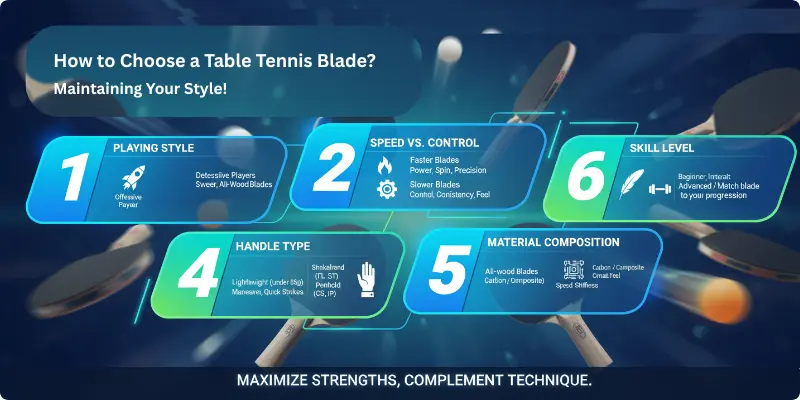
Picking the right table tennis blade isn’t just about what looks good; it’s about matching the blade to your playing style, skill level, and long-term development goals. Every blade influences how you generate speed, maintain control, produce spin, and adapt during rallies. A well-chosen blade can enhance your strengths, while the wrong one can limit your performance. Here are the key factors to consider when selecting the best blade for your game:
1. Playing Style
- Offensive players often choose fast, stiff, carbon-based blades that maximize speed and spin, perfect for aggressive loops and smashes.
- Defensive players rely on slower, all-wood blades with larger heads, offering stability for chopping, blocking, and placement.
- All-round players benefit from balanced blades that provide a mix of speed, control, and spin, ideal for refining overall technique.
2. Speed vs. Control
- Faster blades generate more power and spin, but require precision and timing.
- Slower blades make rallies easier to sustain and provide better consistency, particularly helpful for beginners and developing players.
3. Weight
- Lightweight blades (under 85g): Easier to maneuver, allowing quicker reactions, faster strokes, and better wrist control.
- Heavier blades (over 90g): Add power, stability, and follow-through, but can strain the wrist during long matches.
4. Handle Type
- Shakehand Players: Typically choose FL (flared) or ST (straight) handles for comfort, grip stability, and stroke control.
- Penhold Users: Opt for CS (Chinese penhold) or JP (Japanese penhold) handles to suit their grip and optimize forehand and backhand loops.
5. Material Composition
- All-wood blades: Provide excellent ball feedback, control, and feel, making them ideal for defensive and all-round players.
- Carbon or composite blades: Deliver extra speed, stiffness, and reduced vibration, perfect for aggressive offensive attackers.
Choosing the right blade requires balancing playing style, speed, control, weight, handle type, and material. By understanding these factors, you can select a blade that maximizes your strengths, complements your technique, and helps you progress at every skill level. Remember, the best blade is the one that fits your style and feels natural in your hand.
👉 Discover which table tennis blade material suits your game best at: All-Wood vs Carbon Blades in Table Tennis: to find the best fit for your playstyle.
Understanding Blade Technology & Materials
Modern table tennis blades use advanced materials and construction technologies that significantly impact speed, spin, control, and feel. Understanding these terms helps you decode manufacturer descriptions, compare blades, and predict performance, ensuring you select the right blade for your playing style and skill level. Let’s break down the key technologies and what they mean for your game:
1. Common Composite Materials
- ALC (Arylate-Carbon): Butterfly’s balanced carbon. Offers speed with control and dampened vibration, ideal for offensive and all-round players.
- ZLC (Zylon-Carbon): Stiffer and faster than ALC. Delivers explosive power and high rebound for aggressive attackers.
- TexTreme®: STIGA’s spread-tow carbon technology. Expands the sweet spot for consistent power, spin, and control.
- ARY-c / PBO-c: JOOLA’s composite options. ARY-c prioritizes feel for touch and spin, while PBO-c maximizes stiffness for fast, offensive play.
2. Key Construction Terms
- Inner Carbon: Carbon layers near the core. Preserves wood feel while improving control and dwell time for spin shots.
- Outer Carbon: Carbon under the top ply. Maximizes rebound, speed, and shot consistency, suited for aggressive offensive play.
- 5-ply vs 7-ply: 5-ply blades are more flexible, generating spin and control, while 7-ply blades are stiffer, delivering power and faster strokes.
Knowing the materials and construction behind a blade helps you look beyond marketing claims and choose a blade that matches your style, skill level, and performance goals. By aligning your blade technology with your playing style, you can maximize speed, control, spin, and consistency, turning your racket into a true extension of your game.
Professional Player Blade Setups: Real-World Examples
At the professional level, blade selection is never random. Each player chooses a blade that complements their technique, strengths, and tactical approach. Butterfly table tennis blades are particularly renowned for their quality, and many top players worldwide rely on them for consistent performance and precision. Examining real-world setups offers valuable insight into how blade design, materials, and construction influence performance in modern table tennis.
1. Fan Zhendong (World #1)
- Blade: Butterfly Viscaria (ALC outer carbon)
- Why it works: Offers a perfect speed-control balance, supporting explosive forehand loops while maintaining stability on backhand blocks. Many professionals choose Butterfly table tennis blades for their reliable dwell time and feel at the top level.
2. Ma Long (“The Dragon”)
- Blade: DHS Hurricane Long 5 (Inner carbon)
- Why it works: Inner carbon construction provides exceptional dwell time for heavy spin, paired with the ultra-grippy Hurricane 3 rubber, perfect for aggressive looping and top-spin play.
3. European Style: All-Wood Power
- Blade: Stiga Clipper Wood (7-ply all wood)
- Why it works: The classic 7-ply construction delivers a pure wood feel with enough stiffness for powerful attacks, proving that carbon isn’t always necessary for high-level play.
4. Defensive Specialists
- Blade: Donic Defplay Senso or Butterfly Joo Se Hyuk
- Why it works: Flexible construction and a larger head provide maximum control for chopping, defensive strokes, and unpredictable rubber effects, making it ideal for control-oriented players.
5. All-Round Classic
- Blade: Stiga Allround Classic
- Why it works: The timeless, all-wood design offers an exceptional feel and control, favored by developing players and technical pros for its versatility and consistent performance.
6. Carbon Touch & Speed
- Blade: Donic Waldner Senso Carbon
- Why it works: The carbon-senso blend delivers speed with refined touch, a tribute to Jan-Ove Waldner’s legendary style, combining offensive power with precise ball feedback.
Professional players select blades based on their style, material, and performance requirements, rather than trends. Offensive players favor stiff, fast blades for speed and spin, while all-round and defensive players prioritize control, dwell time, and touch. Studying these setups can guide you in selecting a blade that enhances your strengths, complements your style, and improves overall performance, whether you’re a developing player or a seasoned competitor.
Caring for Your Table Tennis Blade: Essential Maintenance Tips
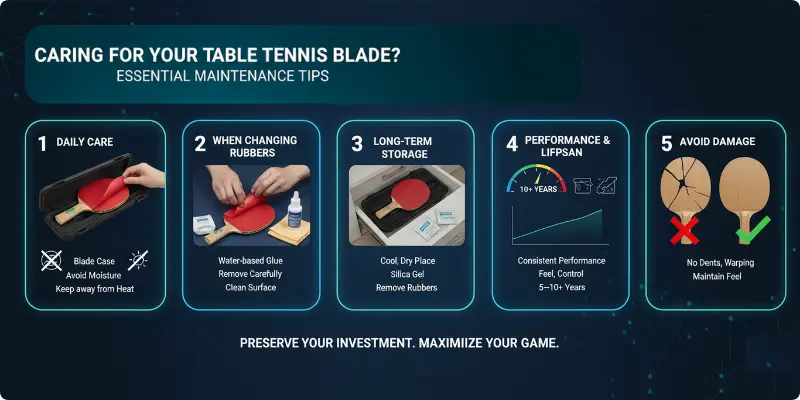
A quality table tennis blade is an investment. Proper care not only extends its lifespan but also maintains consistent performance, feel, and control. A few simple routines can prevent common damage and ensure your blade continues to support speed, spin, and precision during play. Here’s how to take care of your blade:
1. Daily Care
- Use a Blade Case: Protect your blade from dents, scratches, and accidental drops. A hard case is essential, especially for travel.
- Avoid Moisture: Never store your blade in humid areas. Wood can warp or swell, affecting performance and vibration response.
- Keep Away from Heat: Avoid leaving blades in cars or direct sunlight. Heat can damage glue layers, warp wood, and alter the feel.
2. When Changing Rubbers
- Use Appropriate Glue: Opt for water-based glue to prevent surface damage and maintain rubber adhesion.
- Remove Old Rubber Carefully: Peel slowly from the handle outward to avoid pulling wood fibers.
- Clean Blade Surface: Use a rubber cement remover or a gentle adhesive remover. Never scrape with sharp objects, which can damage the wood and affect control.
3. Long-Term Storage
- Store in a Cool, Dry Place: Moderate temperature preserves blade stability and lifespan.
- Use Silica Gel in the Case: Controls moisture and prevents warping or swelling.
- Remove Rubbers for Extended Storage: If not playing for months, removing rubbers prevents glue deterioration and keeps the blade fresh.
With proper care, a high-quality blade can last 5–10 years or more, maintaining its original speed, spin, and control characteristics. Treat your blade well, and it will remain a reliable partner in your table tennis journey, whether you’re practicing loops, blocks, chops, or smashes.
Pre-Made vs. Custom Rackets: Which One Should You Choose?
When starting in table tennis, one of the first decisions you’ll face is whether to go for a pre-made racket or a custom setup. Each option has its benefits depending on your skill level, playing style, and long-term goals. Choosing the right path early can save money, enhance learning, and accelerate progress.
1. Pre-Made Rackets
- Affordable and Convenient: Blades and rubbers come factory-glued, ready to play.
- Best for Beginners: Ideal for players who want a simple, hassle-free setup without worrying about blade and rubber combinations.
- Limitation: Components cannot be changed individually, limiting flexibility as your skills improve.
2. Custom Rackets
- Fully Tailored: Select your blade, rubber types, and assembly to match your playing style.
- Best for Developing Players: Great for those looking to optimize performance, experiment with offensive, all-round, or defensive setups, and fine-tune speed, control, and spin.
- Advantage: Every component can be chosen based on personal preference, allowing for precise customization.
Think of pre-made rackets as your training wheels, perfect for learning the basics with minimal fuss. Custom rackets become essential once you understand your playing style, preferred blades, and rubber types, allowing you to maximize control, speed, and spin. The choice depends on your experience, goals, and how much fine-tuning you want from your table tennis equipment.
👉 For a detailed comparison, see our guide: Pre-Made vs Custom Table Tennis Rackets: Which One to Choose?
Final Thoughts
Your table tennis blade is more than just a piece of wood; it’s the foundation of your racket and a key factor in your performance. Whether you’re a beginner focused on control or a competitive player seeking speed and spin, choosing the right blade will directly influence your technique, consistency, and overall game improvement. When in doubt, start with a reliable all-round blade and experiment as your playing style evolves. Remember, the best blade isn’t necessarily the most expensive; it’s the one that perfectly matches your grip, technique, and personal goals. With the right blade in hand, every stroke, loop, and block becomes more precise and enjoyable.
FAQs
How long do table tennis blades last?
With proper care, a quality table tennis blade can last 5-10 years or more. The lifespan depends on usage, storage, and maintenance. Regular players can use the same blade for a decade, while competitors may notice wear after 3-5 years. Avoid moisture, heat, and improper rubber removal to maximize longevity.
How to choose a table tennis blade?
Focus on playing style, skill level, and material. Beginners benefit from all-wood blades (like Stiga All-round Classic) for control. Intermediate players can explore 7-ply or inner carbon blades, while advanced attackers often prefer carbon composites (like Butterfly Viscaria) for speed and spin.
How to glue rubber to a table tennis blade?
Use water-based table tennis glue. Apply a thin, even layer to both the blade and rubber backing. Wait 5-10 minutes until tacky, then align carefully and press from the handle outward. Use a roller to remove air bubbles and let it dry for 1-2 hours before play.
Please Write Your Comments