How to Play Defensively in Table Tennis: Strategies and Skill Explained
Updated: February 3, 2025
319
Most players dream of landing powerful smashes and fast-paced attacks, but what if you could control the game without relying on speed?
Sounds surprising, right?
Well, table tennis is often associated with fast, aggressive play, but to play defensively in table tennis is an art that turns an opponent’s aggression against them, using precise placement, spin, and patience to force mistakes. Whether you’re returning heavy topspin shots with a well-placed chop or blocking an aggressive attack with finesse, mastering defensive strategies can give you the upper hand.
In this guide, we’ll explore the essential defensive techniques, from chopping and blocking to strategic placement, helping you become a more resilient and tactical player.
Let’s get started!
Defensive play in table tennis focuses on controlling the opponent’s attack, forcing errors, and waiting for the right moment to counterattack. To see how this contrasts with aggressive strategies, explore our guide on attack vs defense in table tennis. Here are the essential defensive techniques, tactics, and mindset shifts to become a solid defensive player.
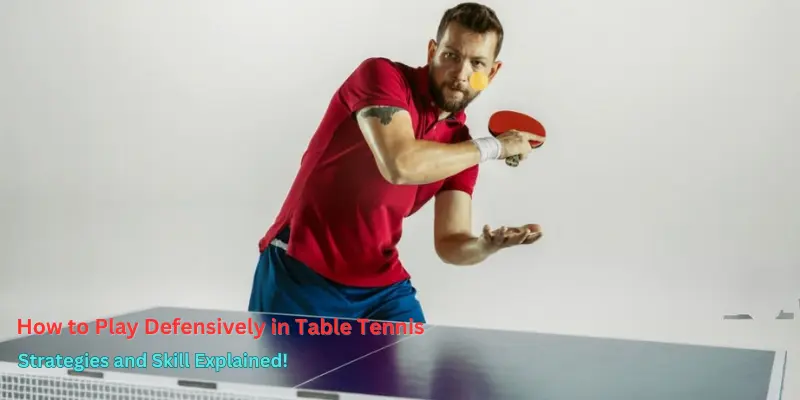
Understanding Defensive Play
Defensive play in table tennis involves returning aggressive shots with control, spin, and placement. Unlike offensive players who rely on power and speed, defensive players focus on consistency, patience, and tactics to frustrate their opponents and force errors.
Types of Defensive Play
There are two primary styles of defensive play in table tennis:
1. Chopping Defense
- The chopping defense aimed at creating a heavy backspin to make it difficult for the opponent to attack. This style is typically played farther from the table, allowing the player more reaction time to return fast shots with spin variations.
2. Blocking and Countering
- The blocking and countering focused primarily on neutralizing aggressive shots and returning them with controlled placement. Players using this approach stand closer to the table and use quick reflexes to redirect fast shots.
Mastering defensive play
Mastering defense in table tennis requires strong control, precise ball placement, and the ability to absorb and redirect an opponent’s attacks. Defensive players rely on techniques like chopping, blocking, and lobbing to keep their opponents off balance and force mistakes. A solid defensive strategy neutralizes powerful shots and creates opportunities to counterattack effectively. Here are some of the defensive techniques you can use in your game:
1. Using a Chop stroke
A chop in table tennis is a defensive stroke that adds a heavy backspin to the ball, making it hard for opponents to lift and attack. This technique is used primarily by defensive players who prefer a slower, strategic game rather than engaging in rapid attacking rallies.
How to Execute a Chop?
- Use a relaxed grip and a slightly open racket angle.
- Swing your racket downward in a brushing motion as the ball approaches.
- Focus on generating backspin by contacting the lower half of the ball.
- Stay low with bent knees and be ready to react to your opponent’s next move.
- Adjust the depth of your chop by varying the racket angle and follow-through speed.
When to Use a Chop
- Against fast loop shots to slow the game down and disrupt the opponent’s rhythm.
- When playing away from the table, to maintain control of longer rallies.
- To force the opponent into making mistakes due to excessive backspin, which can lead to weak returns or outright errors.
2. Effective Blocking Techniques
Blocking in ping pong is essential for close-to-the-table defensive play. It neutralizes fast attacks of the opponents and redirects the ball strategically, reducing the opponent’s ability to control the pace of the rally.
Types of Blocks
Blocks in table tennis are of different types, such as:
1. Passive Block
- A simple block that returns the ball with minimal force, used primarily to maintain consistency and control.
2. Active Block
- Adds slight forward motion to place the ball with more speed and accuracy, useful against weaker attacks.
3. Spin Block
- Adjusts racket angle to manipulate the opponent’s spin, either absorbing it or redirecting it in an unexpected direction.
How to Execute a Block?
- Use a compact motion with minimal wrist movement to maintain control.
- Keep the racket slightly closed when facing topspin shots to counteract the spin.
- Absorb the power of the opponent’s shot by maintaining a loose grip and letting the ball make natural contact with the racket.
- Direct the ball to difficult angles, such as deep corners or the opponent’s weaker side, making it harder for them to follow up with strong attacks.
3. Using Lobs to Extend Rallies
Lobbing is yet another defensive technique that helps keep the ball in play when forced away from the table. Lobbing allows you to buy time to regain a better position and prepare you for the next shot.
How to Lob Effectively
- Stand at a comfortable distance from the table, typically several feet away.
- Use an upward brushing motion to send the ball high with topspin, making it difficult for the opponent to execute a powerful smash.
- Aim for deep placement on the opponent’s side of the table to maximize the difficulty of their next shot.
- Vary the height and spin to keep the opponent uncertain and less confident in their attack.
4. Controlling the Game with Placement and Variation
A strong defensive player doesn’t just return shots; they place them strategically to limit the opponent’s offensive opportunities. They either change the level of spin, vary speed, or mix long and short strokes to disrupt the opponent’s rhythm.
Key Placement Strategies
Here are some of the key placement strategies:
1. Deep Corners
- Using deep corners makes it difficult for opponents to attack with full power since they have to stretch or move quickly.
2. Short Returns
- Short returns prevent the opponents from making strong loop shots by keeping the ball low and near the net.
3. Wide Angles
- Hitting wide angles forces the opponents to move and lose balance, reducing their ability to execute powerful attacks.
5. Mental Toughness and Patience
A good defensive player must be mentally strong and patient. Unlike offensive players who seek quick points, defensive players win through persistence, endurance, and strategic play, which is key to winning games.
How to Develop a Defensive Mindset?
- Stay calm under pressure and avoid rushing shots, focusing instead on controlled, well-placed returns.
- Be ready to extend rallies and wait for opponent errors rather than forcing risky shots.
- Accept that defensive play requires longer rallies and superior endurance to wear down aggressive opponents.
- Keep a positive attitude even when facing highly skilled offensive players. Confidence in your defensive abilities is key to maintaining composure in matches.
👉 For more ways to enhance your skills, check out our guide on training for table tennis to master these skills!
6. Equipment for Defensive Players
Having a proper technique in addition to the right equipment can enhance defensive play by improving control, spin manipulation, and consistency.
Ideal Equipment Choices
A defensive play requires proper equipment for effective performance, such as:
1. Blades
- Use all-around or defensive blades with good control and a softer feel to absorb the impact of fast attacks.
2. Rubbers
- Choose tacky rubbers for spin control or long pips for disruptive play. Long pip rubbers help in returning aggressive topspin shots with unpredictable spin.
3. Racket Setup
- Some defensive players use a combination of different rubbers on each side to add variation. For example, one side with long pips for chopping, and the other with an inverted rubber for attacking opportunities.
Conclusion
Defensive play in table tennis is more than just returning shots; it’s about dictating the pace of the game and outlasting your opponent with smart tactics. By mastering key techniques like chopping, blocking, lobbing, and precise ball placement, you can turn defense into a weapon, frustrating even the most aggressive players. With the right mindset, endurance, and equipment, you can develop a rock-solid defensive style that keeps you in control and forces your opponents to play on your terms.
Please Write Your Comments