Parts of a Table Tennis Racket: A Complete Breakdown of All Components
Updated: February 24, 2026
443
What gives a table tennis racket its speed, spin, and control? The answer lies in the way its individual components are designed and assembled, each serving a specific purpose in how the racket interacts with the ball.
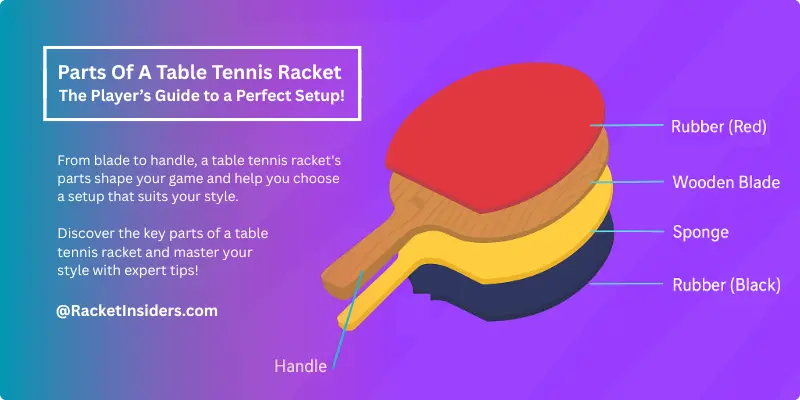
At first glance, a table tennis racket consists of several visible parts, including the blade, rubber, sponge, and handle. Each component performs a distinct function. The blade provides structure and overall feel, the rubber creates friction and spin, the sponge influences rebound and speed, and the handle supports grip and stability. Together, these elements define the construction of a table tennis racket and explain why different rackets produce different playing characteristics.
In this guide, we’ll break down the main parts of a table tennis racket: blade, rubber, sponge, and handle, explaining what each component is and how it contributes to the racket’s overall design and function.
If you’ve ever wondered why rackets produce different levels of spin, speed, and control, this article is for you.
Let’s get started.
Key Takeaways
- The parts of a table tennis racket influence speed, spin, and overall comfort during play.
- Blade type and construction affect control, touch, and shot precision.
- Rubber characteristics determine spin potential, grip, and ball interaction.
- Sponge thickness impacts shot speed, spin, and responsiveness.
- The red/black rule enables players to use different rubbers strategically.
- Proper maintenance and care help preserve performance and extend the racket’s lifespan.
- Misaligned parts, overly stiff blades, or handles that don’t fit a grip can reduce control and consistency.
Why Understanding the Parts of a Table Tennis Racket Matters
A table tennis racket is more than simple sports equipment; it is a carefully constructed tool whose components work together to influence how the ball responds during play. Each part, from the blade to the rubber and sponge, contributes to characteristics such as speed, spin, control, and overall feel. Learning about these components helps explain how rackets are designed, how setups vary, and why rackets can behave differently even when they appear similar. Here are some key reasons why racket parts are worth understanding:
- A racket is a combination of specialized components, not just wood and rubber.
- Each part serves a specific function within the racket’s construction.
- Understanding components clarifies how blade and rubber combinations interact.
- Knowing the parts of a racket makes maintenance and care easier to understand.
- Learning racket structure explains why different rackets feel and respond differently during play.
In short, a table tennis racket is more than the sum of its parts. Each component plays a distinct role, and together they determine how the racket performs, clarifying why different rackets behave differently.
Key Components of a Table Tennis Racket
A table tennis racket consists of several interconnected parts, each contributing to how the racket interacts with the ball. From the blade and handle to the rubber and sponge, every component influences characteristics such as speed, spin, control, and overall feel. Understanding these key parts provides a clearer picture of how a racket is constructed and why different rackets can behave differently during play. Let’s explore each component in detail:
1. Blade: The Core of the Racket
The blade forms the structural foundation of a table tennis racket and plays a central role in determining its playing characteristics.
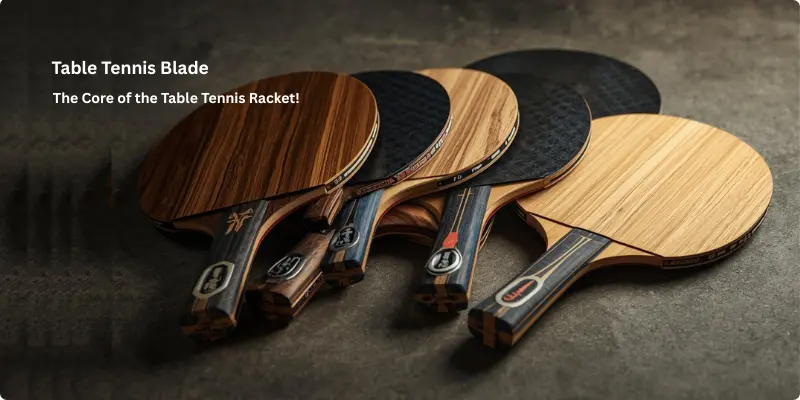
A table tennis racket blade is typically made from 5 to 7 layers of wood. Some blades also incorporate materials such as carbon, Arylate, or Kevlar to modify stiffness, stability, and vibration. The blade’s construction influences how energy transfers through the racket and how feedback is felt during impact.
Blade Types
Table tennis blades are commonly categorized based on their construction materials and structural design. These differences influence how the blade responds to ball contact and how energy is transferred during play.
- All-Wood Blades: Generally provide longer ball dwell time and a softer feel.
- Carbon Blades: Include composite layers that increase stiffness and stability.
Key Functions of the Blade
Beyond structure, the blade contributes to several functional characteristics that influence how the racket behaves during impact. These functions are determined by material composition, stiffness, and construction layers.
- Vibration Dampening: Composite materials can reduce vibration at impact, resulting in a cleaner feel.
- Speed: Stiffer constructions transfer energy more directly, resulting in faster shots.
- Control: Softer wood structures allow greater ball dwell time, improving touch and placement.
Blade construction and materials directly shape a racket’s speed, control, and feel. Even blades that appear similar can perform differently, highlighting the importance of understanding how each type and function contributes to overall racket performance.
2. Handle: Your Connection to the Racket
A table tennis racket’s handle may seem like a small detail, but it directly connects your hand to the blade and significantly affects comfort, control, and maneuverability during play. Its shape influences shot precision, grip stability, and fatigue, especially in long matches or high-speed exchanges. Choosing the right handle shape ensures your hand and racket work efficiently together.
Common Handle Shapes
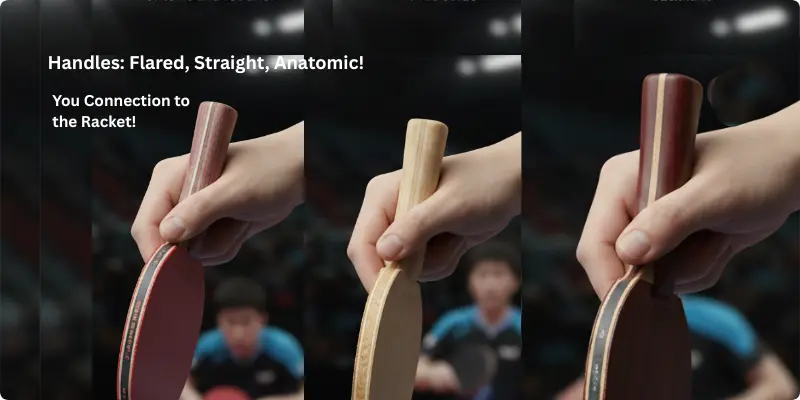
Table tennis racket handles come in several standard shapes, each designed to suit different grip styles and preferences. The right shape improves comfort, control, and overall racket performance during rallies.
- Flared (FL): Wider at the end, preventing the racket from slipping during powerful shots. Most common among shakehand players.
- Straight (ST): Uniform thickness for quick grip changes; ideal for players who twiddle the racket.
- Anatomic (AN): Curved to fit naturally in the palm, providing a comfortable hold.
Comfort and fit matter more than brand or aesthetics. Handles that match your hand size and grip style help maintain control and consistency during play.
3. Rubber: The Spin Generator
The table tennis rubber is the racket’s primary interface with the ball, directly affecting spin, speed, and control. Its type and characteristics determine how the ball reacts, influencing offensive and defensive strategies alike. Understanding the different rubbers helps players choose the right one for their style and level. Together with the blade and sponge, the rubber forms a key part of the racket’s core system, shaping its performance and overall playing personality.
Categories of Rubbers
Rubbers fall into two main categories based on surface texture and playing characteristics. The choice between them determines how the racket interacts with the ball during different strokes and styles of play.
- Pimple-In (Inverted) Rubber: Smooth surface for maximum spin and control; ideal for offensive players.
- Pimple-Out Rubber: Short, medium, or long pips that reduce spin sensitivity and create disruptive effects.
Rubber Layers
A table tennis rubber consists of two distinct layers that work together during play. Each layer serves a specific function in generating speed, spin, and feel.
- Top Sheet: The outer surface that interacts with the ball.
- Sponge Layer: The foam layer beneath the top sheet, affecting speed, spin, and rebound.
Players who favor heavy topspin often prefer tacky or firmer rubbers, while beginners may benefit from softer, more forgiving rubbers that emphasize control and consistency.
👉 To explore the differences between pimple types and choose the best option for your style, check out our guide on Long Pips vs Short Pips Table Tennis Rubber.
4. Sponge: The Speed Booster
The racket sponge is the hidden layer beneath your rubber that plays a major role in transferring energy from the racket to the ball. Its thickness and density directly affect shot speed, spin, and control, making it a key factor in tailoring your racket to your playing style. Working together with the rubber, the sponge determines how the ball reacts when struck. Here’s a look at the main sponge types and their effects on play:
- Thin Sponge (1.0–1.5mm): Slower, more controlled shots; preferred by defensive or control-oriented players.
- Medium Sponge (1.6–1.9mm): Balanced speed and control; suited for all-round players and developing styles.
- Thick Sponge (2.0–2.5mm): Faster shots with higher spin potential; suited for aggressive attackers seeking speed and topspin.
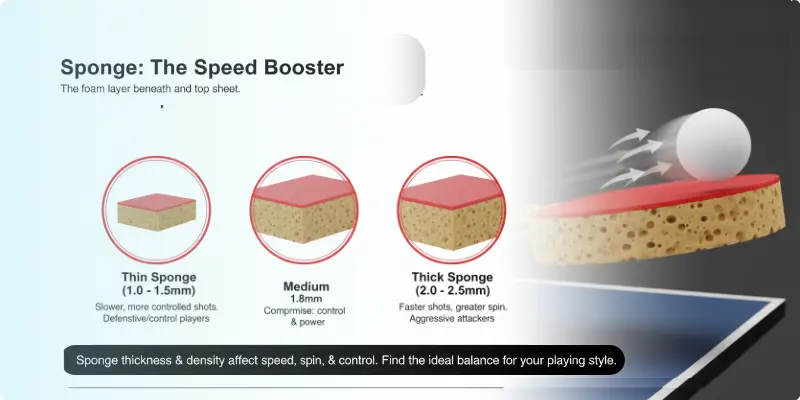
Sponge thickness directly influences how a racket responds on contact, shaping whether shots feel crisp and fast or soft and controlled. Alongside the blade and rubber, it completes the racket’s core system and defines much of its playing character.
Additional Elements That Affect Your Racket
Some components and rules don’t directly affect speed, spin, or control but are essential for maintaining your racket, adhering to regulations, and extending its lifespan. While they don’t change how the ball responds, they help keep your equipment in optimal condition and competition-ready.
1. Edge Tape: The Racket Protector
Edge tape may be small, but it plays a crucial role in protecting your racket’s blade from damage during play. Every bump, scrape, or accidental hit can chip the blade or loosen the rubber, and edge tape acts as a protective buffer to maintain your racket’s integrity. Edge tape wraps around the circumference of the blade and serves two main purposes:
- Protection: Shields the blade and rubber from chips, cracks, and peeling.
- Aesthetics: Available in various colors, giving your racket a polished, professional appearance.
While edge tape does not influence play directly, using it helps ensure consistent racket performance, extends the lifespan of both blade and rubber, and reduces the need for frequent repairs.
2. Glue: The Invisible Essential
Though unseen, the table tennis racket’s glue is a critical component for maintaining your racket’s performance. It keeps the rubber firmly attached to the blade, ensuring consistent energy transfer, spin, and control during play. Without proper adhesion, shots can feel off, spin may be reduced, and the rubber can peel prematurely.
With speed glue now banned by the ITTF for health reasons, water-based glues are the standard choice. Proper application and maintenance are key:
- Application: Apply thin, even coats to both the blade and rubber for optimal adhesion.
- Maintenance: Re-glue when the rubber begins to peel or loses performance.
Using the right glue preserves your racket’s functionality, maintains consistent speed and spin, and helps your setup last longer.
3. Red and Black Sides: The ITTF Color Rule
One of the key rules in official table tennis is that a racket must have one red side and one black side. This color distinction is more than just aesthetic; it allows players and opponents to quickly recognize which rubber is being used, helping to anticipate spin, speed, and shot behavior. Understanding this rule is essential for strategic planning and proper racket setup.
- Strategic Advantage: Place offensive rubbers on one side and defensive rubbers on the other to switch tactics efficiently during rallies.
- Customization: Decide which color corresponds to each rubber type to optimize your playing style.
For example, a player might use pimple-out rubber on the red side for defensive blocks and inverted rubber on the black side for aggressive loops. This setup improves clarity for both players while maximizing strategic options.
Table Tennis Racket Accessories You Shouldn’t Ignore
While not official parts of a ping pong racket, certain accessories can improve your playing experience and help your equipment last longer. These small extras make a difference in performance, protection, and comfort during extended practice or matches. Adding them to your routine is a simple way to get more from your gear.
- Racket Case: Protects your blade and rubbers from moisture, dust, and accidental knocks.
- Grip Tape: Enhances your hold, absorbs sweat, and prevents slips during intense rallies.
- Rubber Cleaner: Restores tackiness, maintaining spin, control, and overall responsiveness.
Using these accessories regularly ensures consistent racket performance and long-term durability. For a complete guide to all essential table tennis accessories and their benefits, see our detailed article on Table Tennis Accessories.
How Racket Parts Work Together
A table tennis racket is made up of several distinct components that together form a complete system. Each part serves a specific role, and no single component works in isolation. Every piece depends on the others to shape the racket’s overall response. Together, these components work seamlessly to determine the racket’s performance and feel during play.
- Blade: The blade provides the racket’s structural foundation. Its material and layering influence stiffness, weight, and how energy transfers through the racket during play.
- Rubber: Covering the blade, the rubber forms the contact surface with the ball. Its texture and composition affect grip, spin, and ball interaction.
- Handle: The handle connects the player’s hand to the blade. Its shape and size determine grip style and how naturally the racket fits in the hand.
- Sponge: Positioned between the blade and rubber, the sponge layer modifies the racket’s feel and responsiveness. Its thickness and density influence both speed and control.
The blade and rubber function as a connected pair, with each affecting the other’s performance. When combined with the handle and sponge, these elements define the racket’s overall playing characteristics.
How Racket Parts Influence Playing Styles
While every table tennis racket contains the same core components, variations in blade construction, rubber characteristics, sponge thickness, and handle design can support different playing approaches. The way these parts combine often determines how well a racket complements a specific style.
- Offensive players typically benefit from faster blade constructions (such as carbon) and thicker sponges (2.0 mm+) that enhance speed and topspin potential during attacking strokes.
- Defensive players often prefer setups that emphasize control, using softer all-wood blades or controlled rubbers to improve consistency, ball placement, and shot variation.
- All-round players usually rely on balanced combinations, medium-thickness sponges (1.8mm), and versatile blades that provide moderate speed while maintaining reliable control across different situations.
Understanding how racket parts relate to playing styles explains why two players at the same level might use completely different equipment. It also highlights how component choices influence overall playing characteristics without changing the racket’s basic structure.
Common Issues Related to Racket Parts
Table tennis players sometimes experience performance problems related to how racket components are selected or used. Understanding these issues provides insight into how each part influences overall play. These points describe what can occur when parts don’t align well with a player’s style or skill level:
- Blades with high stiffness can reduce control for less experienced players.
- Handle shapes that don’t suit a grip style may cause discomfort during extended play.
- Rubbers with unsuitable surface characteristics may not grip the ball as effectively.
- Sponge thickness affects the natural balance between speed and control.
- Poor rubber maintenance can lead to reduced spin and grip over time.
- Rackets that do not comply with ITTF rules may be ineligible for competition.
These factors illustrate how the choice and use of each component can influence a racket’s overall performance and the player’s experience.
Conclusion
Understanding the parts of a table tennis racket, from the blade and handle to the rubber, sponge, and additional elements such as edge tape and glue, provides a clearer picture of how the racket functions as a complete system. Each component influences key characteristics such as speed, spin, control, and comfort, shaping how the ball responds during play. The ITTF rule requiring one red and one black rubber side also adds an important strategic dimension to racket design. Proper care and accessories, including racket cases and rubber cleaners, help maintain consistent performance and extend equipment lifespan. By learning how table tennis paddle parts work together and how they relate to different playing styles, you gain a deeper understanding of why rackets can feel and perform differently at the table.
FAQs
What are the main parts of a table tennis racket?
A table tennis racket consists of a blade, rubber sheets, sponge, handle, and edge tape. Each part contributes to the racket’s performance by affecting speed, spin, control, and overall feel during play.
Are table tennis paddle parts different from a racket?
No, table tennis paddle parts are the same as a racket’s parts. The terms “paddle” and “racket” are used interchangeably, but the components: blade, rubber, sponge, handle, and edge tape, remain identical.
How can I identify the labeled parts of a table tennis racket?
You can identify the labeled parts by consulting a diagram or image that highlights the blade, rubber, sponge, and handle. Each section is clearly marked to show its function, placement, and how it affects play, making it easier to understand racket construction.
Do ping pong rackets have the same parts?
Yes, ping pong rackets have the same parts as table tennis rackets. The name may differ by region, but the structure and components are identical, including blade, rubber, sponge, handle, and edge tape.
Which part of a table tennis racket affects control the most?
Control is most influenced by the blade and sponge thickness. Softer all-wood blades and thinner sponges generally provide more precise touch and slower ball response, which helps beginners or defensive players maintain better accuracy and consistency.
Please Write Your Comments